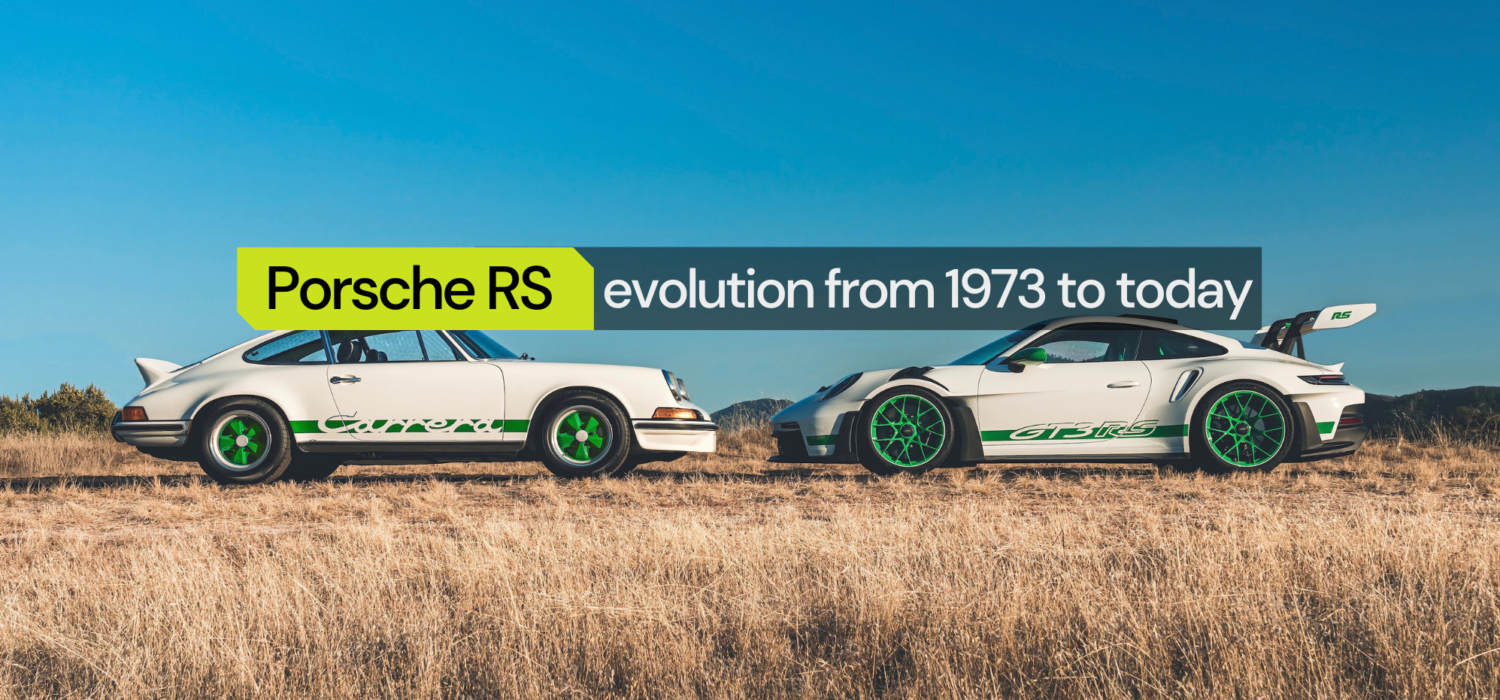
Porsche RS evolution from 1973 to today
The Porsche RS designation did not start as a separate model line or an attempt to create a prestige 911 variant. It was a practical solution tied to racing participation. “Rennsport” referred to a lighter build, lower mass, and chassis changes aimed at circuit driving. Any equipment without a direct effect on driving was removed from the car.
Aerodynamic parts and suspension settings were judged by their impact on stability and control. Appearance was not a priority. As technology changed, RS appeared as specific versions within the 911 range.
1973 Porsche 911 Carrera RS 2.7: a rules-defined starting point
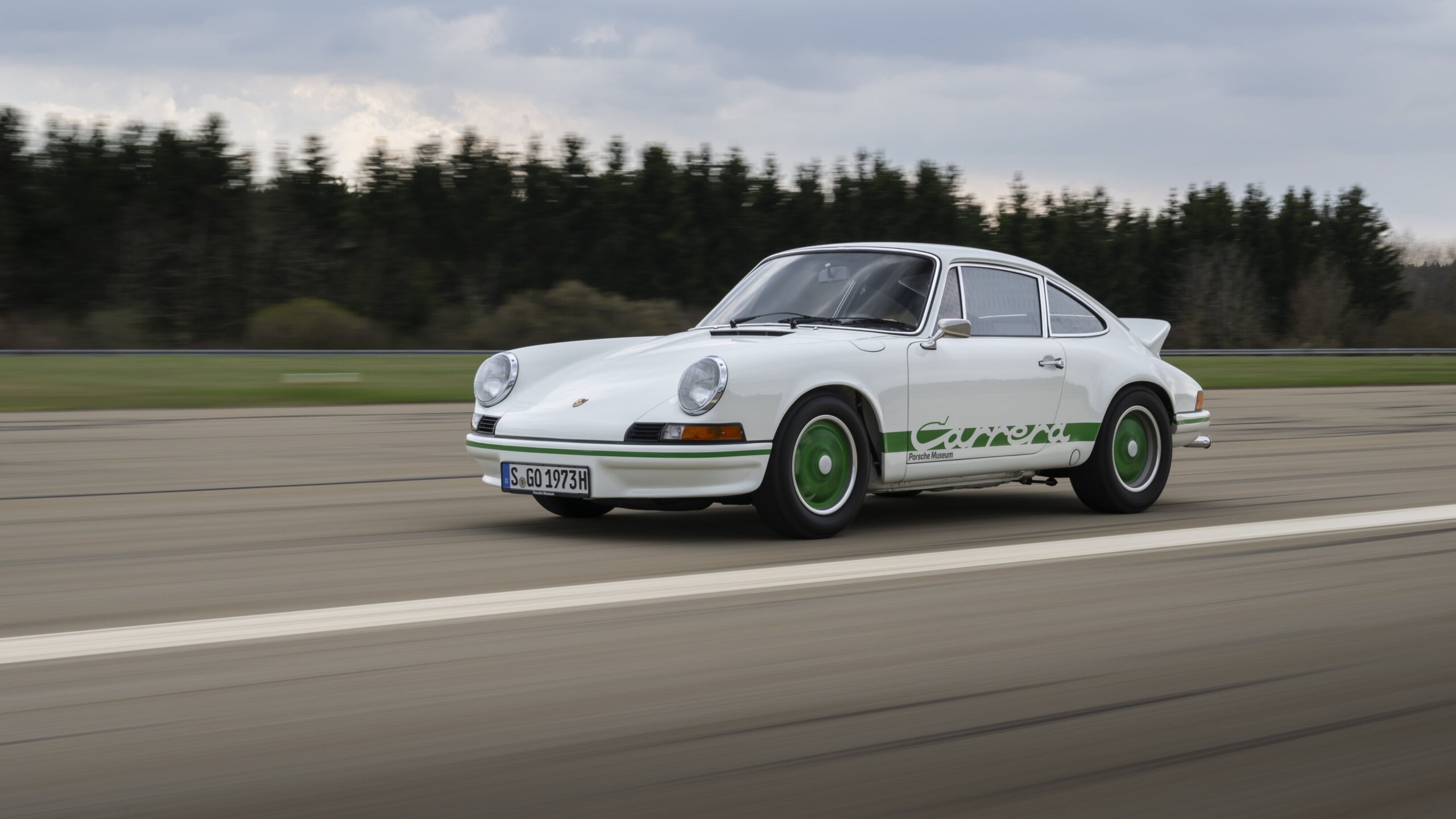
The 911 Carrera RS 2.7 was a response to period racing regulations that required a minimum number of road cars. Porsche’s answer was a limited-production 911 variant, presented at the 1972 Paris Motor Show. The initial plan was 500 cars, the quantity needed to compete internationally.
Demand exceeded expectations: the allocation sold out within weeks, so Porsche continued production. RS therefore moved from a purely technical homologation project into a road-legal model without abandoning its track-oriented purpose.
Reduced mass and aerodynamic elements directly affected high-speed stability. The rear “ducktail” spoiler addressed rear-axle downforce and became one of the most recognizable early RS cues.
Porsche 964 Carrera RS: a return to low mass
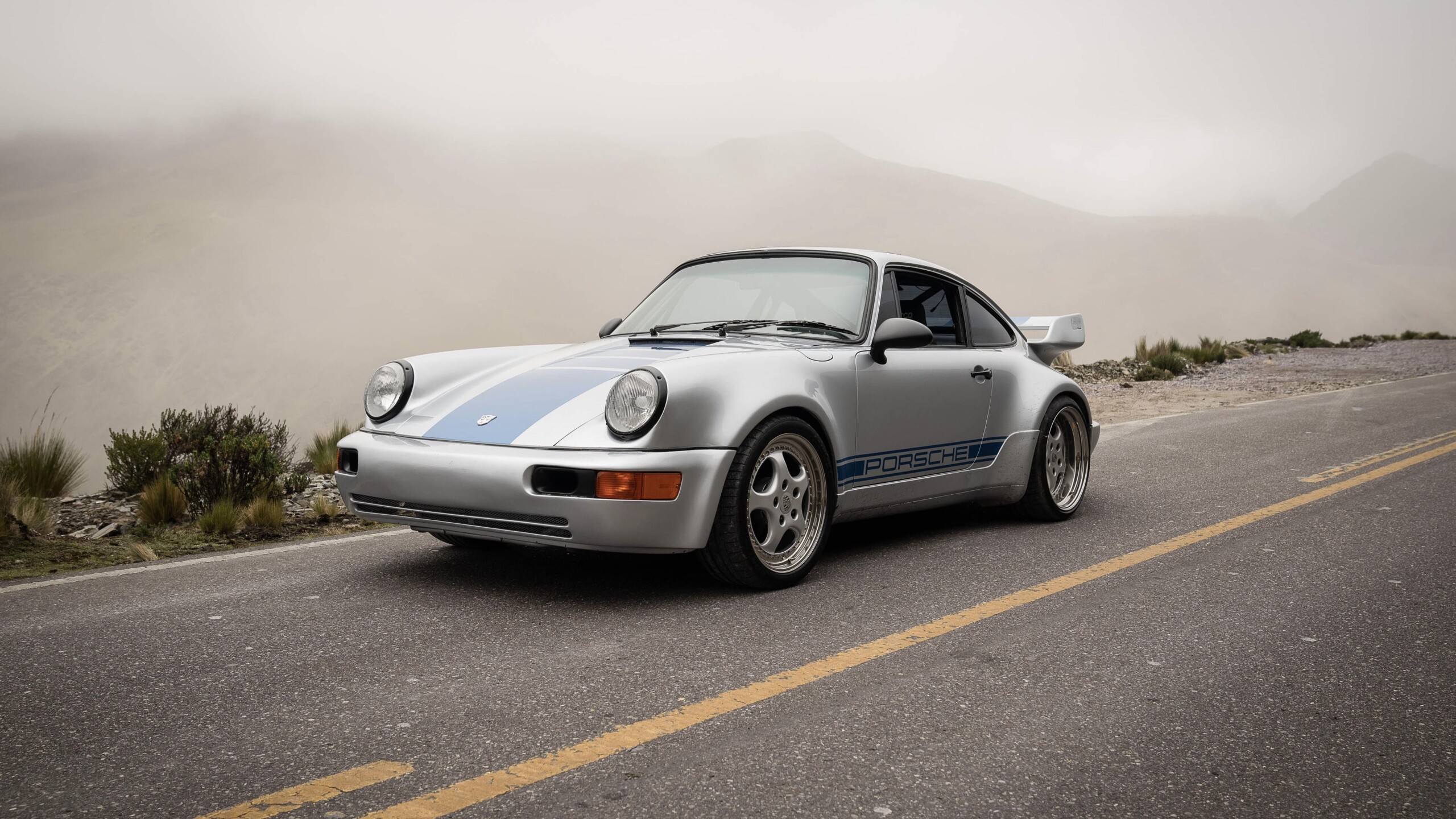
By the late 1980s, the 911 range broadened and models became more day-to-day usable. The 964 introduced more comfort-related equipment, including power steering and ABS, features not typical of earlier 911 generations.
Launched in 1992, the Carrera RS was a distinct 964 version. It was aimed at Europe, with focus on mass, chassis calibration, and mechanical clarity. Comfort equipment was reduced, leaving a simpler configuration.
The Clubsport package tightened this direction further. The cabin retained only essential equipment, and the car was clearly separated from more versatile 911 variants.
Porsche 993 Carrera RS: the end of the air-cooled era
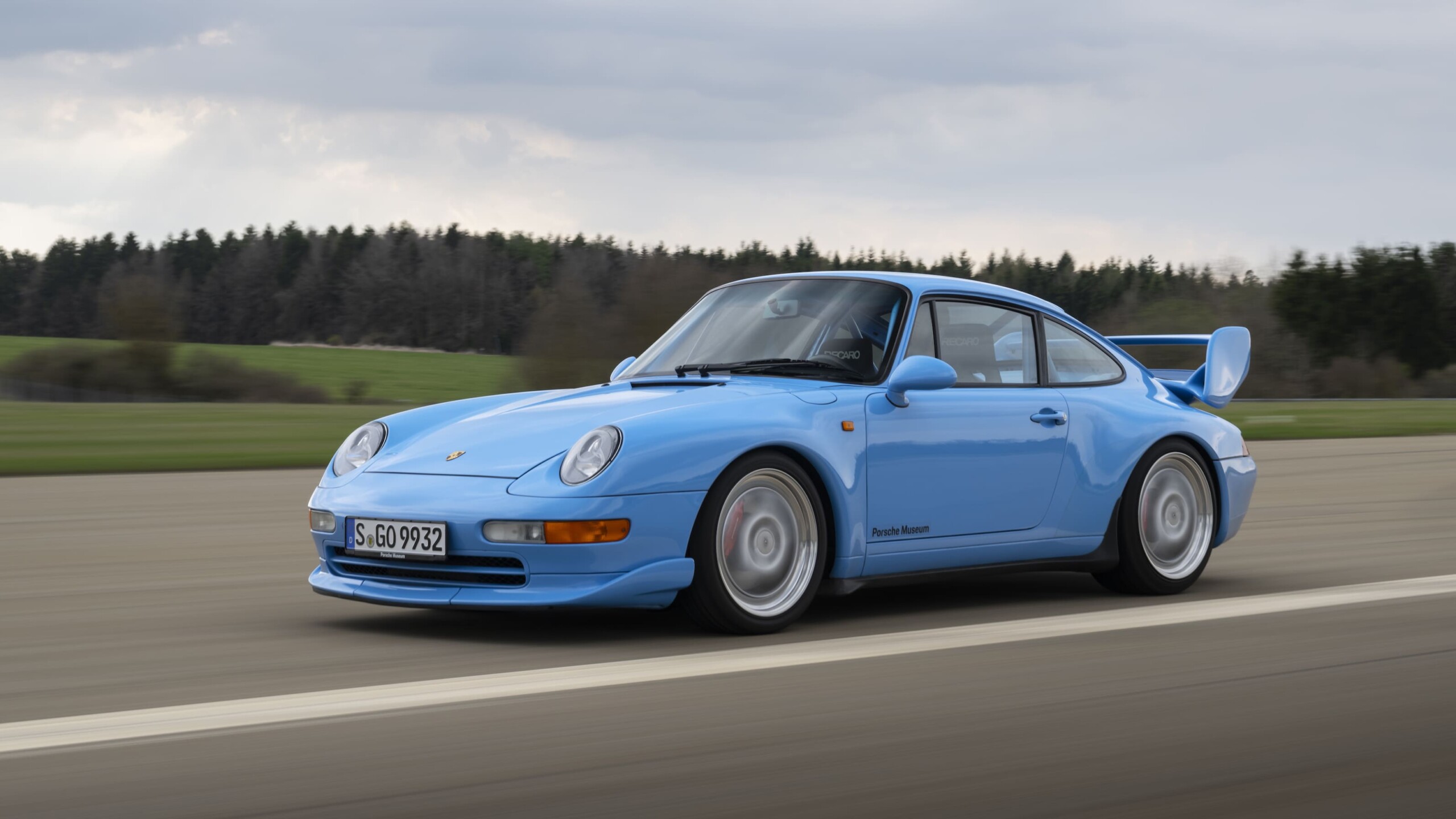
The 993 was the last air-cooled generation of the Porsche 911. Within it, the Carrera RS occupies a specific position. A 3.8-liter engine and roughly 300 hp represented the highest output reached in an air-cooled RS version.
These cars were primarily sold in markets where demand for the 911 RS already existed. With a small build volume and factory specification, the 993 Carrera RS became one of the key models of the air-cooled RS period.
Porsche 996 GT3 RS: RS shifts into the GT line
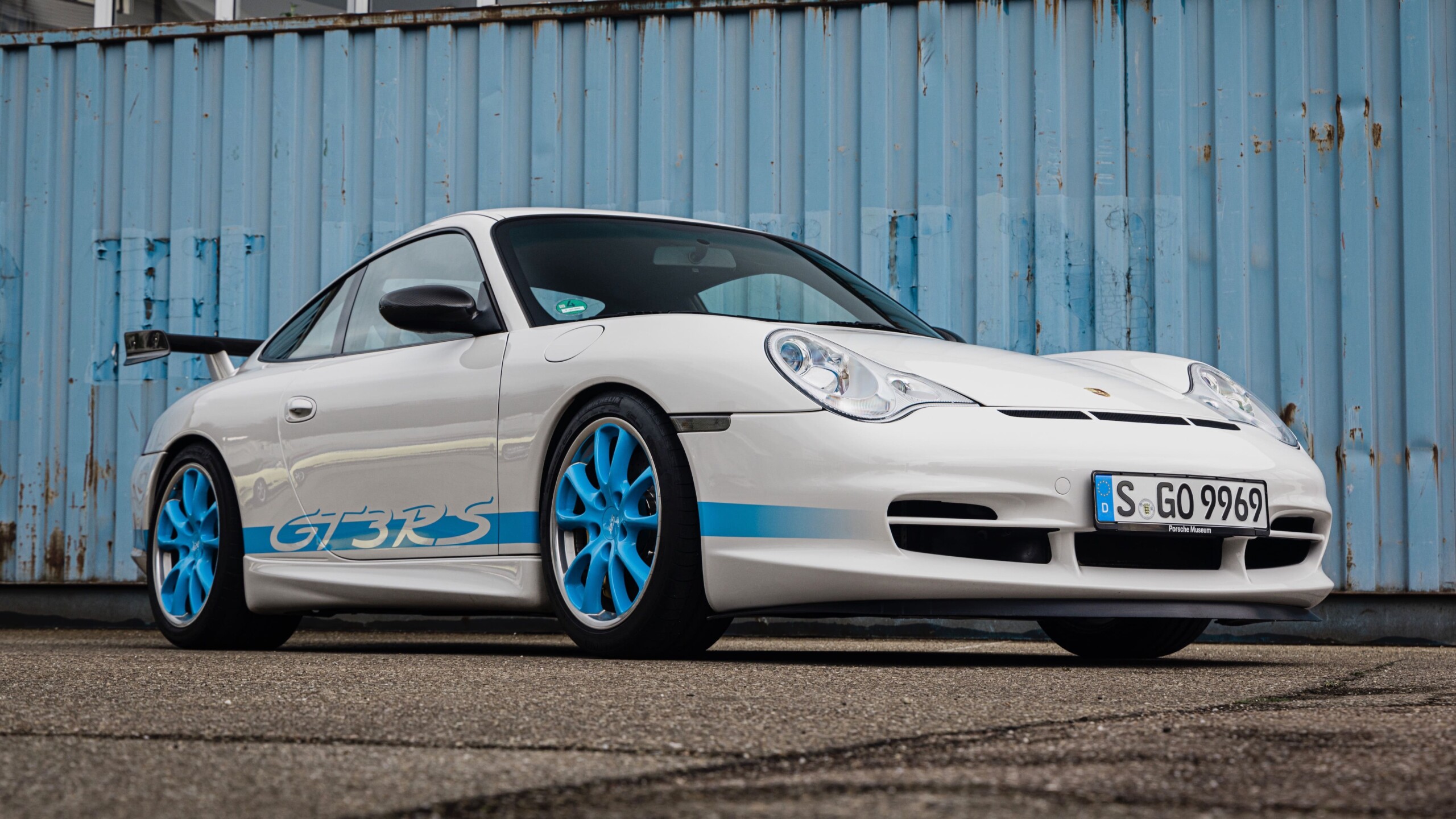
With water-cooled engines, the RS designation did not continue the Carrera RS line. In the 996 generation it moved into the GT range as the GT3 RS. This was a 911 developed for circuit use while remaining road-legal.
The 996 GT3 RS used a flat-six based on the “Mezger” architecture, derived from Porsche endurance racing programs. This engine became the technical base for GT models and distinguished them from other water-cooled 911 variants.
In this generation, RS meant full-system preparation for track driving. Chassis, brakes, and cooling were tuned as one package for consistent operation under high loads.
Porsche 997 GT3 RS ir RS 4.0: the displacement ceiling
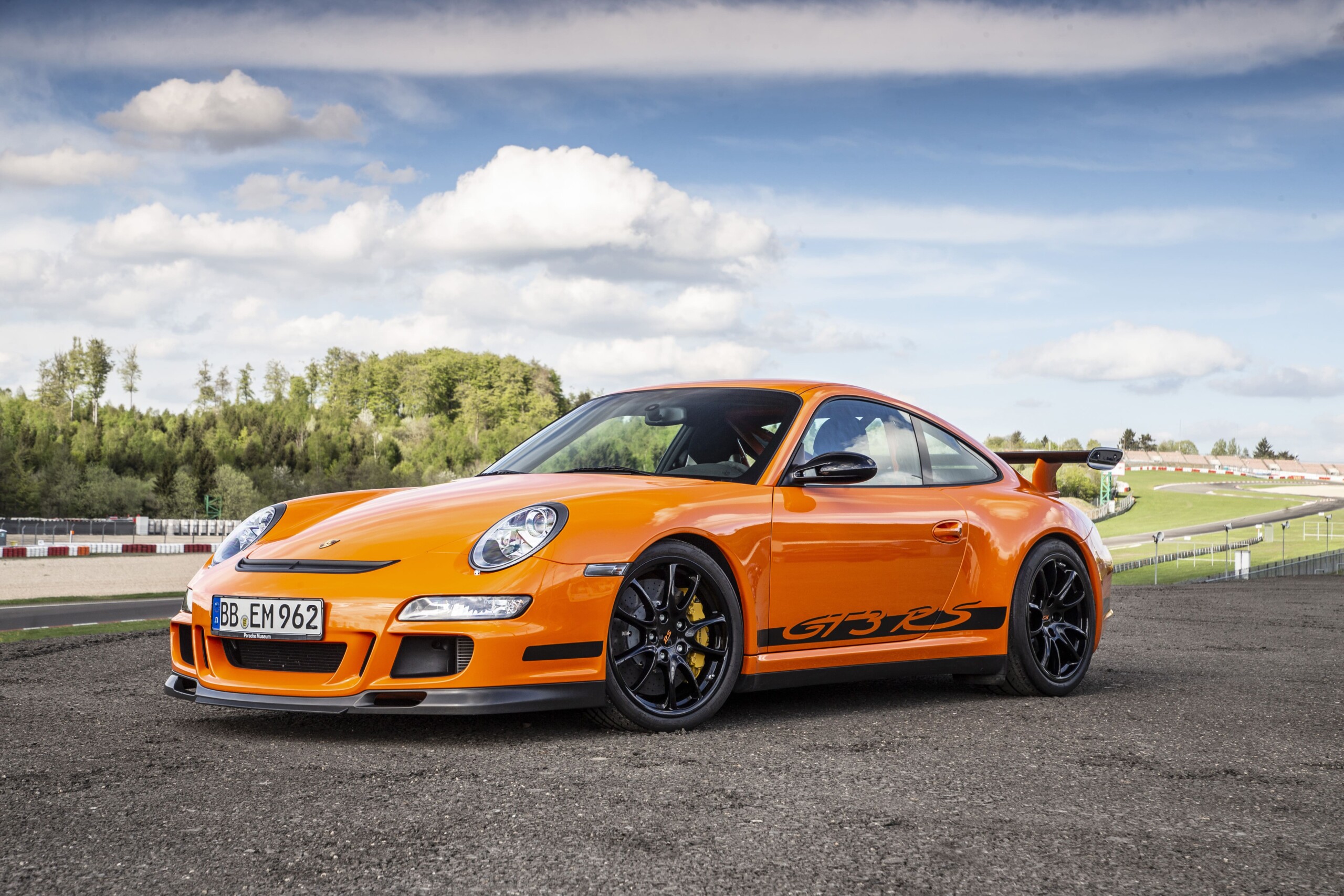
In the 997 generation, RS brought a wider track and greater aerodynamic load, improving chassis balance. The run culminated in the GT3 RS 4.0, limited to 600 units.
The GT3 RS 4.0’s naturally aspirated 4.0-liter engine, at around 500 hp, was the largest-displacement unit ever fitted to a GT3 RS. This model marked the end of the naturally aspirated RS phase before the next step in technology.
Porsche 991 GT3/GT2 RS: technology as a tool
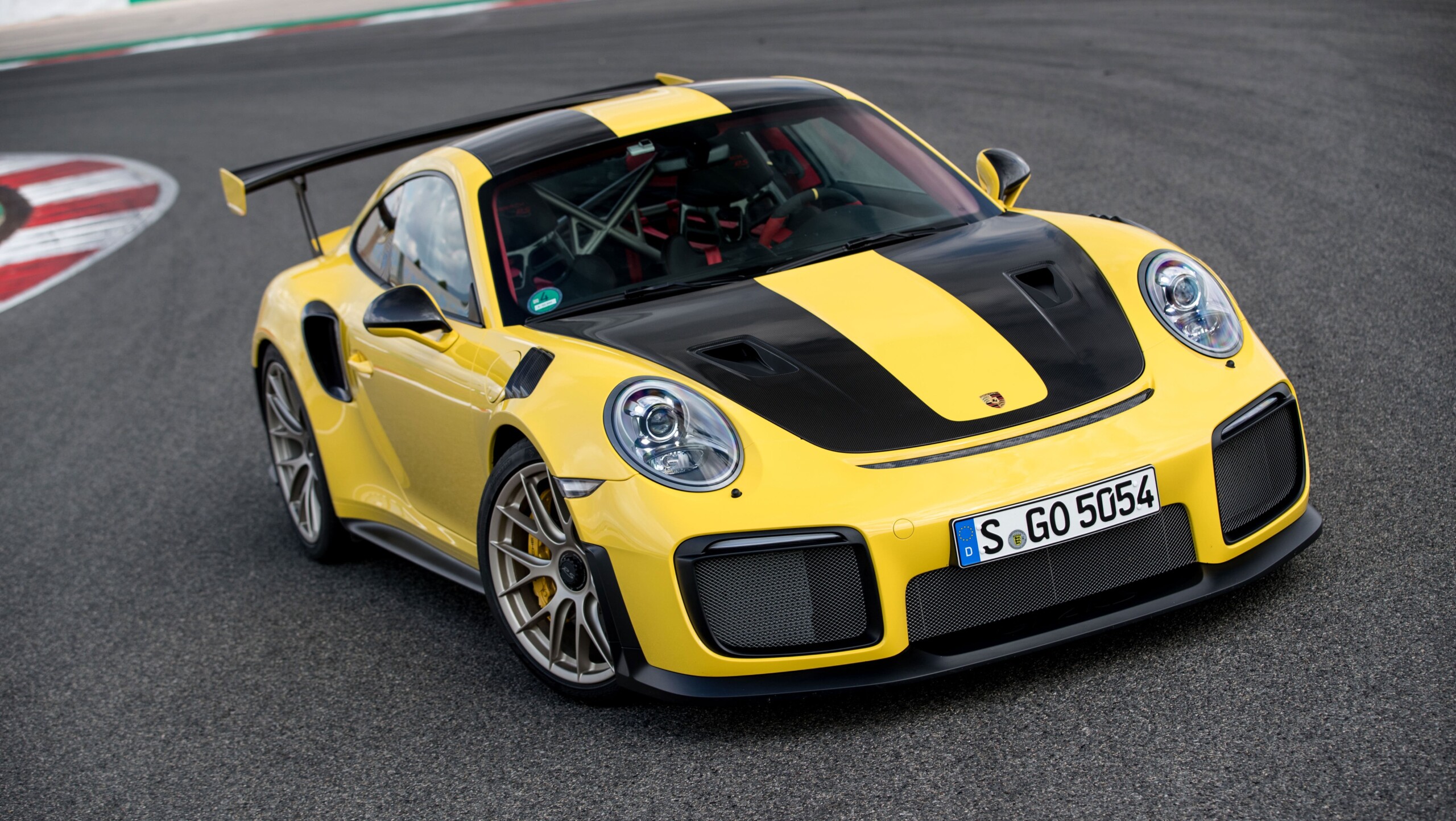
In the 991 generation, RS was not limited to reducing mass. Rear-axle steering, more complex aerodynamics, and the PDK gearbox (Porsche Doppelkupplungsgetriebe, a very fast dual-clutch transmission) became structural elements, allowing the car to match modern road and tire load profiles.
At the same time, the RS name appeared on the GT2 RS. This version was based on the 911 Turbo architecture and combined high output with track-oriented chassis solutions. From this point, RS was no longer tied exclusively to naturally aspirated engines.
Porsche 992 GT3 RS: aerodynamics as the primary factor
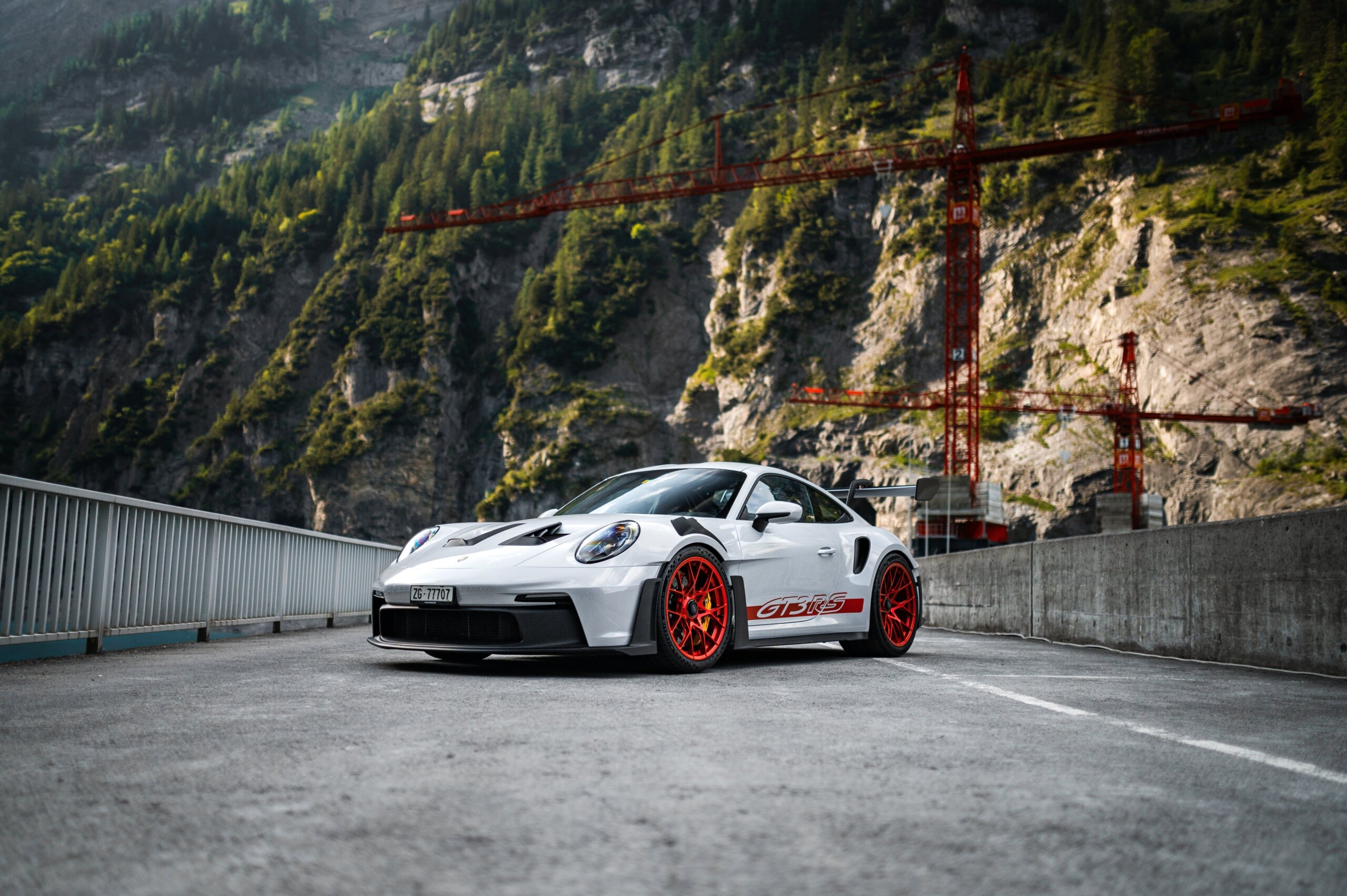
Today, the RS designation is applied to the 992-generation 911 GT3 RS. Introduced in 2022, it was developed with emphasis on aerodynamic load and its effect on stability at high speed.
The 4.0-liter naturally aspirated flat-six produces 525 hp, but the main engineering changes are tied to the “Porsche Active Aerodynamics” system. An adjustable front diffuser, a large rear wing, and a DRS mechanism (it opens the rear wing on straights to reduce drag and increase speed, and does the opposite in corners) operate as an integrated aerodynamic system.
In 1973, RS was developed to stabilize the rear of the car at high speed. In the 992 generation, aerodynamics is actively managed, and downforce becomes one of the core performance variables.
Porsche 718 Cayman GT4 RS: the RS idea without a rear engine
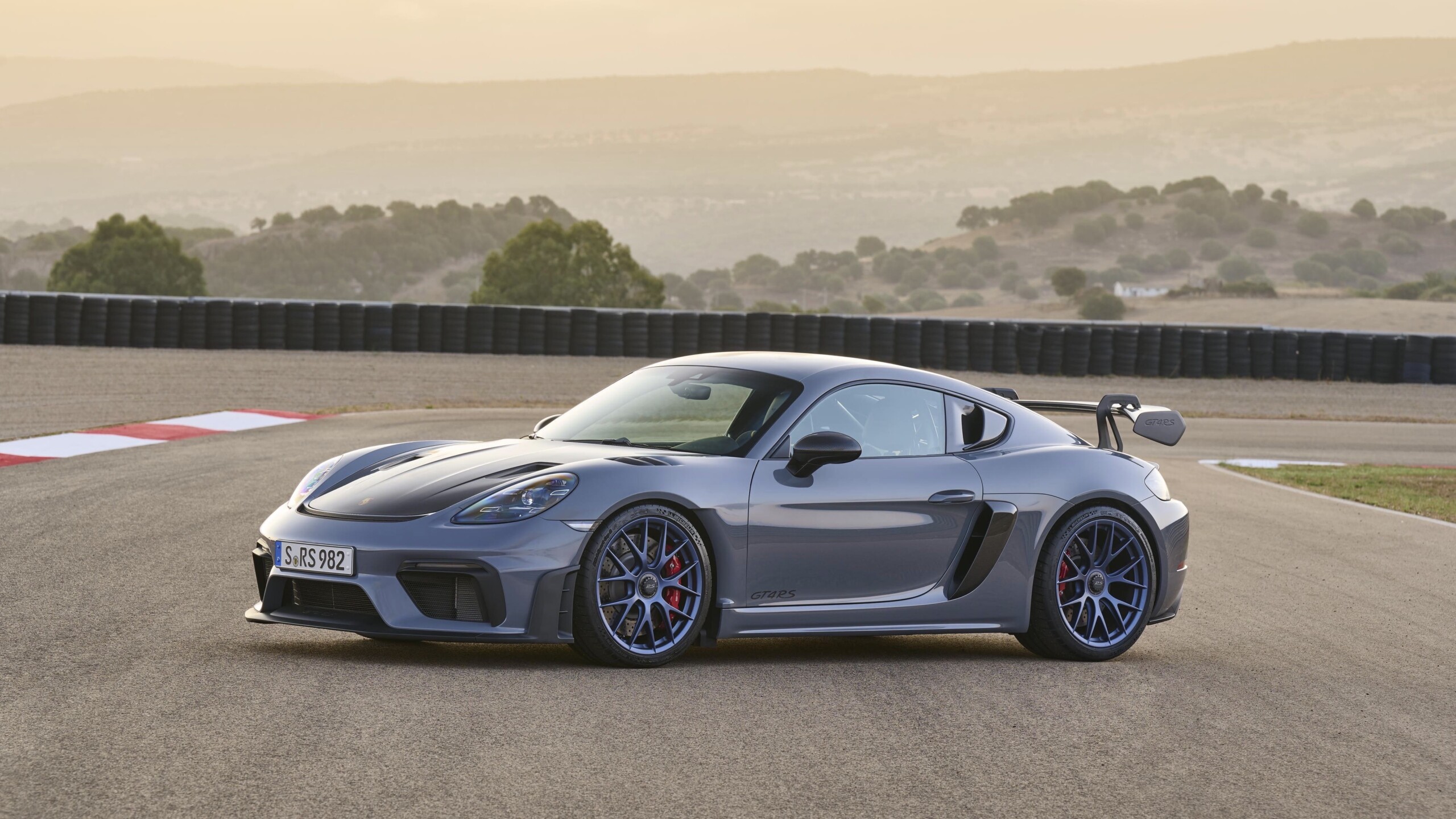
For the first time, the RS designation appeared on a model that is not a 911. The 718 Cayman GT4 RS places the engine in the middle of the car rather than at the rear, so balance and corner behavior differ from a 911.
The 718 Cayman GT4 RS is powered by a 4.0-liter naturally aspirated flat-six producing around 500 hp and revving to nearly 9,000 rpm. Chassis settings and aerodynamic solutions are calibrated for a different mass distribution.
GT4 RS follows the same RS principles, but applies them within a different layout.
Why do RS models retain value?
RS versions within 911 history appeared irregularly and always in limited numbers. This was not a separate model line, but specific 911 derivatives with altered fundamentals: mass, suspension, aerodynamics. Each RS was built on the 911 version in production at the time.
Original specification matters on these cars: aerodynamic parts, factory packages, and documented history used to evaluate authenticity.
RS modifications also show how the Porsche 911 itself changed over time.