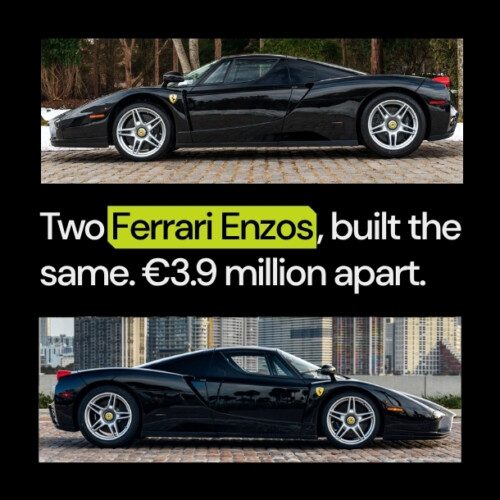
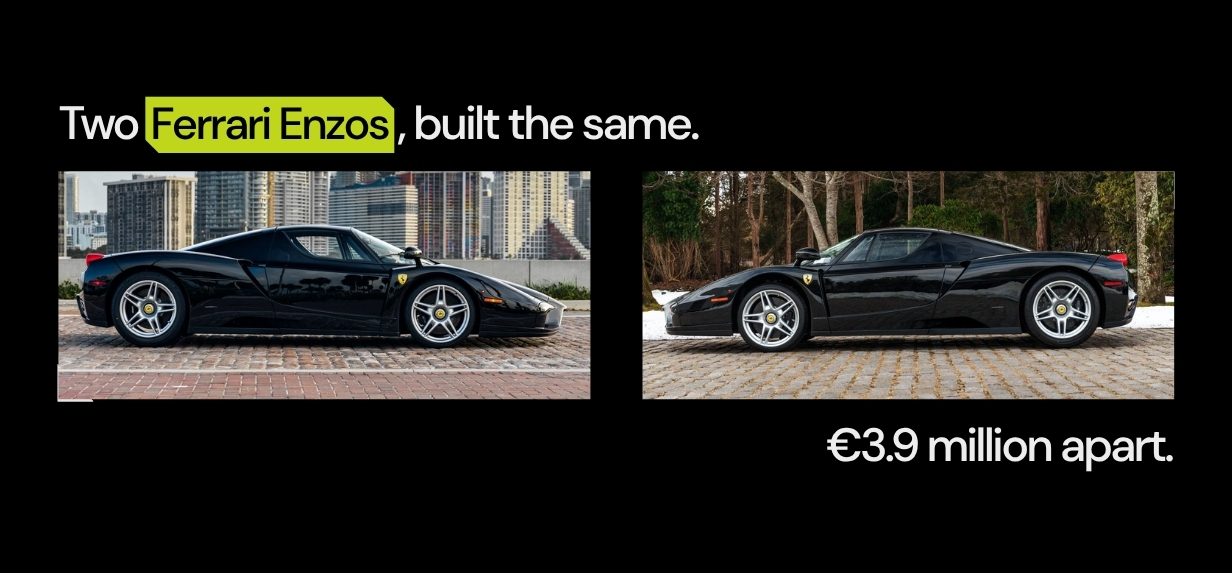
The €3.9 million difference between two nearly identical Ferrari Enzos
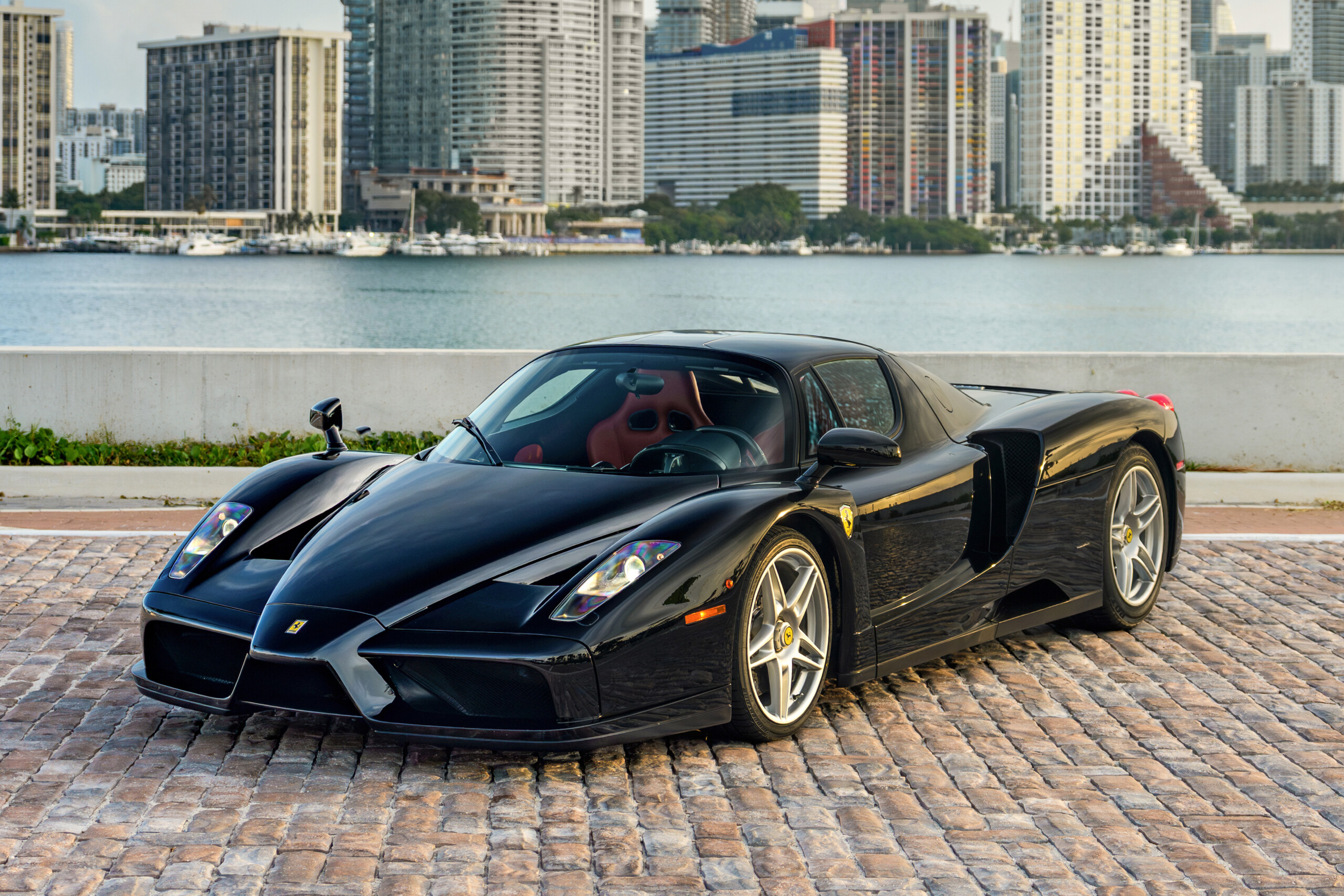
In March, a black Ferrari Enzo sold in Florida for €12,981,000. Five months later, in California, an almost identical one made €9,126,000.
Same year, same rare colour, same auction house. Nearly €3.9 million between them – and nobody in either room looked surprised.
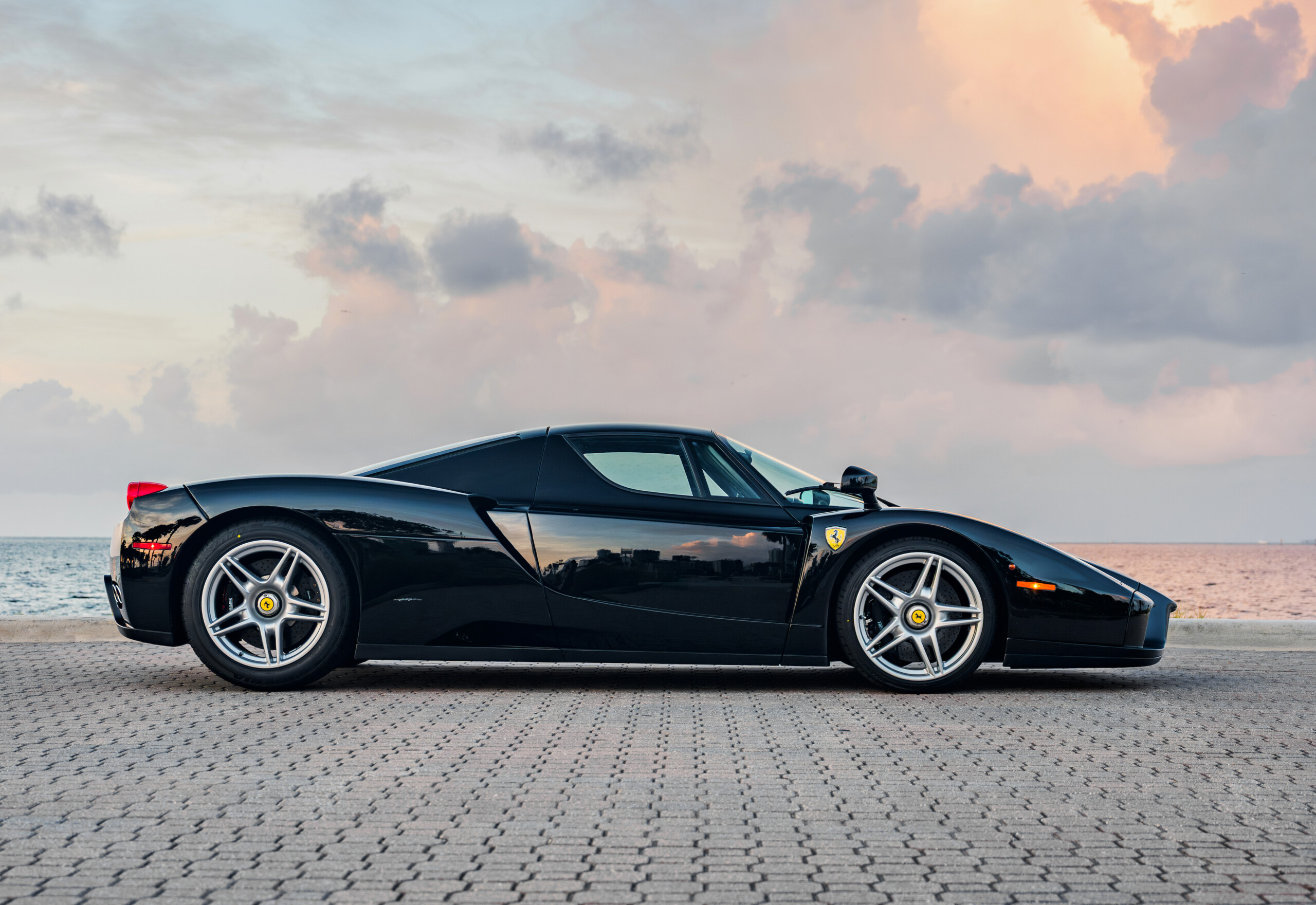
Ferrari built the Enzo in 2002 and named it after the man who founded the company – the only time it has ever done that. Carbon-fibre tub, naturally aspirated V12, an F1-style paddle-shift gearbox.
You could not simply order one. Ferrari invited existing F40 and F50 owners and asked around $660,000 in the United States. It built 399 in total, plus a 400th for Pope John Paul II, who asked that it be sold for charity. Most left the factory in Rosso Corsa, the iconic Ferrari red.
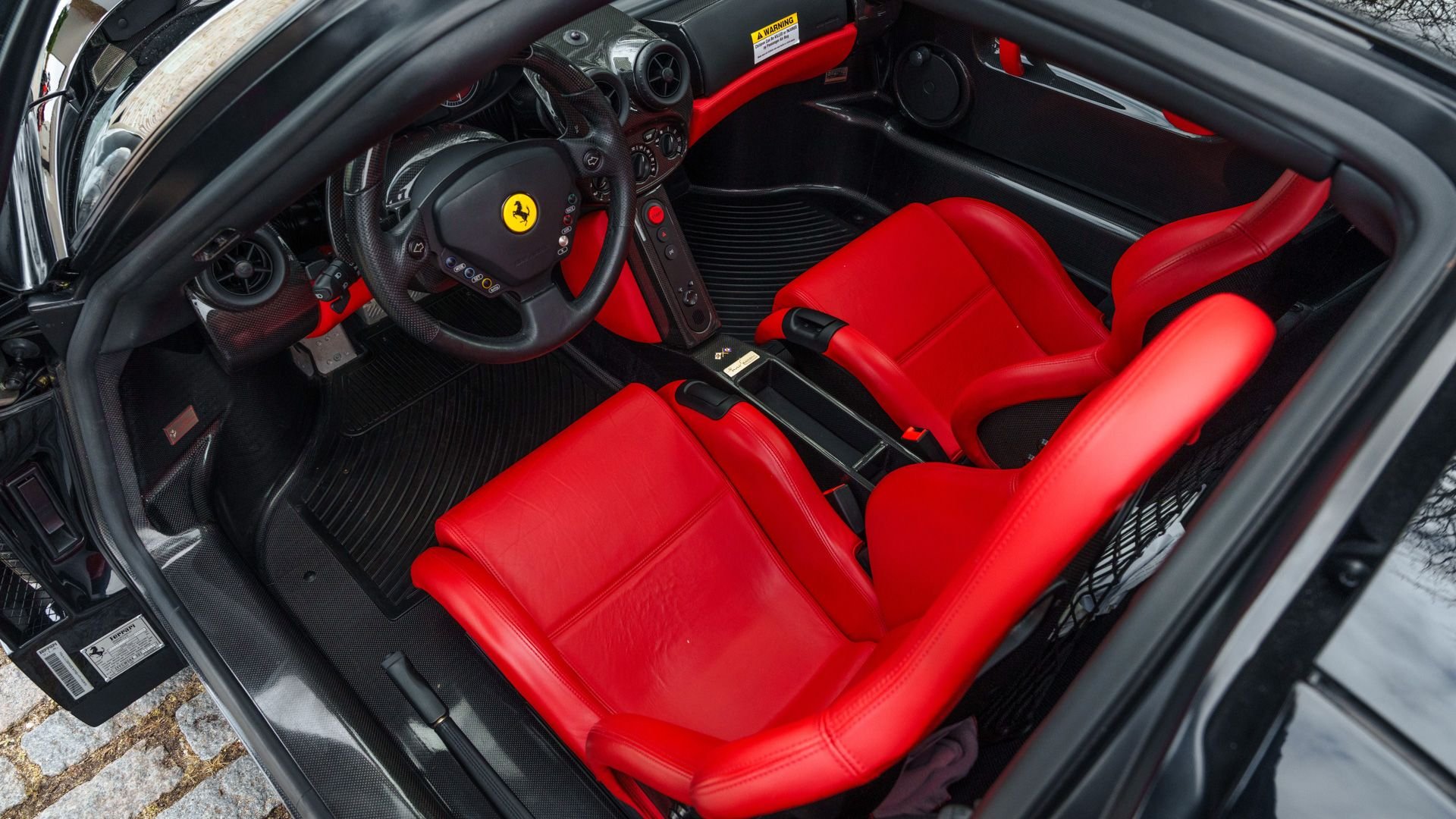
A few, though, did not. Roughly a dozen Enzos reached North America in Nero D.S., a deep near-black. And of those, only three were trimmed inside in Rosso: red leather against black paint, the exact inverse of the car everyone imagines.
Two of those three came up for sale this year, both through Broad Arrow.
Two cars built the same, €3.9 million apart
On 6 March 2026, at the auction house’s Amelia Island sale in Florida, the first Enzo, Lot 182 – delivered new through Ferrari of Long Island, one owner, 692 kilometres – made €12,981,000. It was the top lot of the largest auction Broad Arrow has ever held, and the second-highest price ever paid for a Ferrari Enzo at public auction.
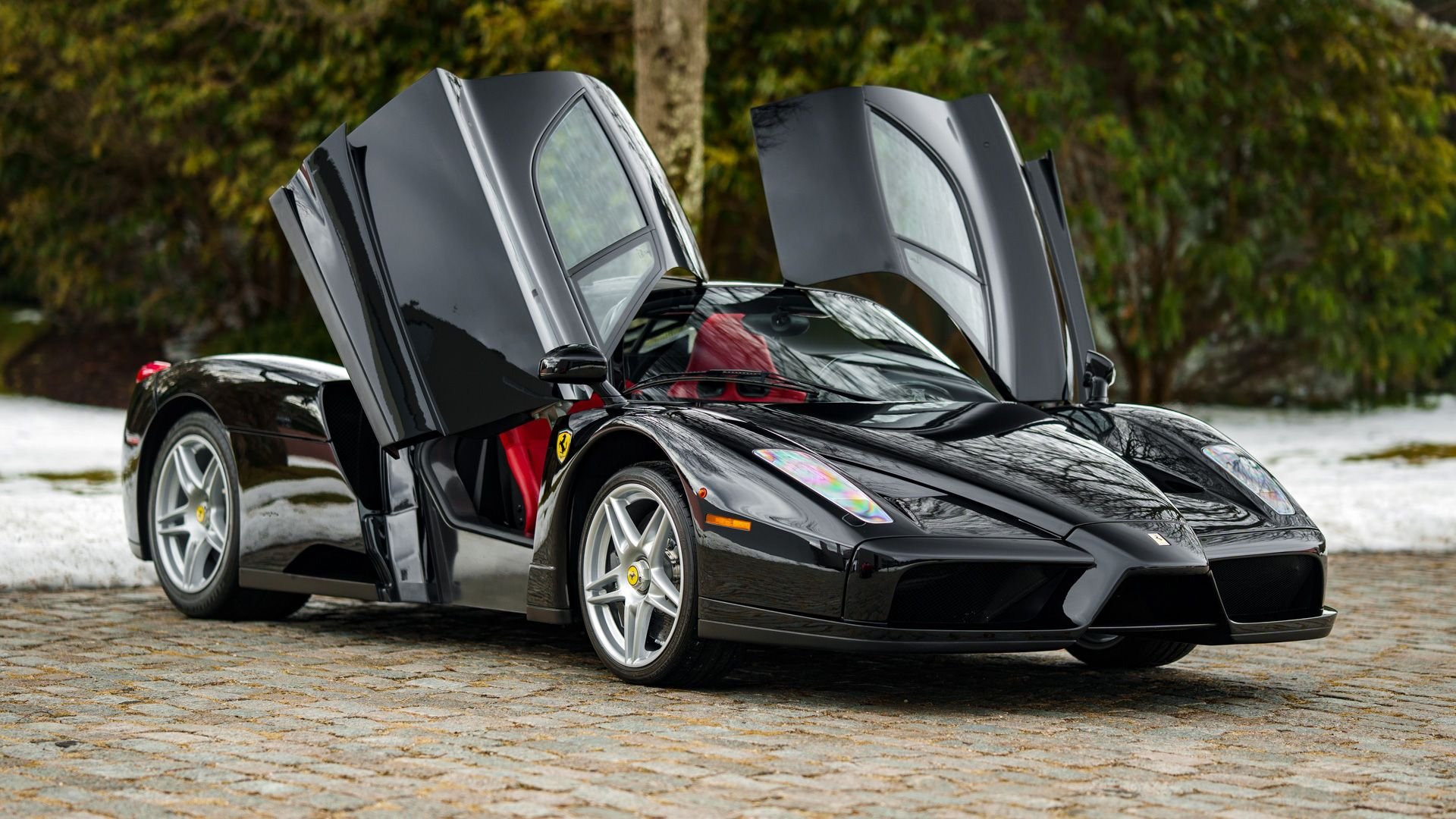
Earlier this month, 14 August 2026, at the Broad Arrow Quail Auction during Monterey Car Week, the second Ferrari Enzo, Lot 277, was sold without reserve for “only” €9,126,000. It was completed April 2003, had three owners and 21,353 kilometres on the odometer.
First, the year 2026 itself
Before comparing two cars, you have to know what the market did between them.
Two years ago an Enzo was a €3.5 million car. Every one sold at a major auction in 2023 and 2024 landed within half a million of that. In 2025, none sold at all.
Then the market tripled. In January a yellow Enzo made €15.3 million at Mecum Kissimmee, three times the record that had stood for a decade.
The clearest sign of what was happening is a car that sold twice. A one-off Enzo in Rosso Dino went for €9.5 million in January. Five months later it made €11.1 million. It had covered twelve miles in between.
By August the heat had come off a little. Our two cars sold either side of all that. The March one caught the market near its top, the August one did not. Some of the €3.9 million is a date, not a difference between the cars.
The obvious answer is wrong
692 kilometres against 21,353. One car has barely turned a wheel, the other has done thirty-one times the distance. That looks like the whole explanation, and for about ninety seconds it is satisfying.
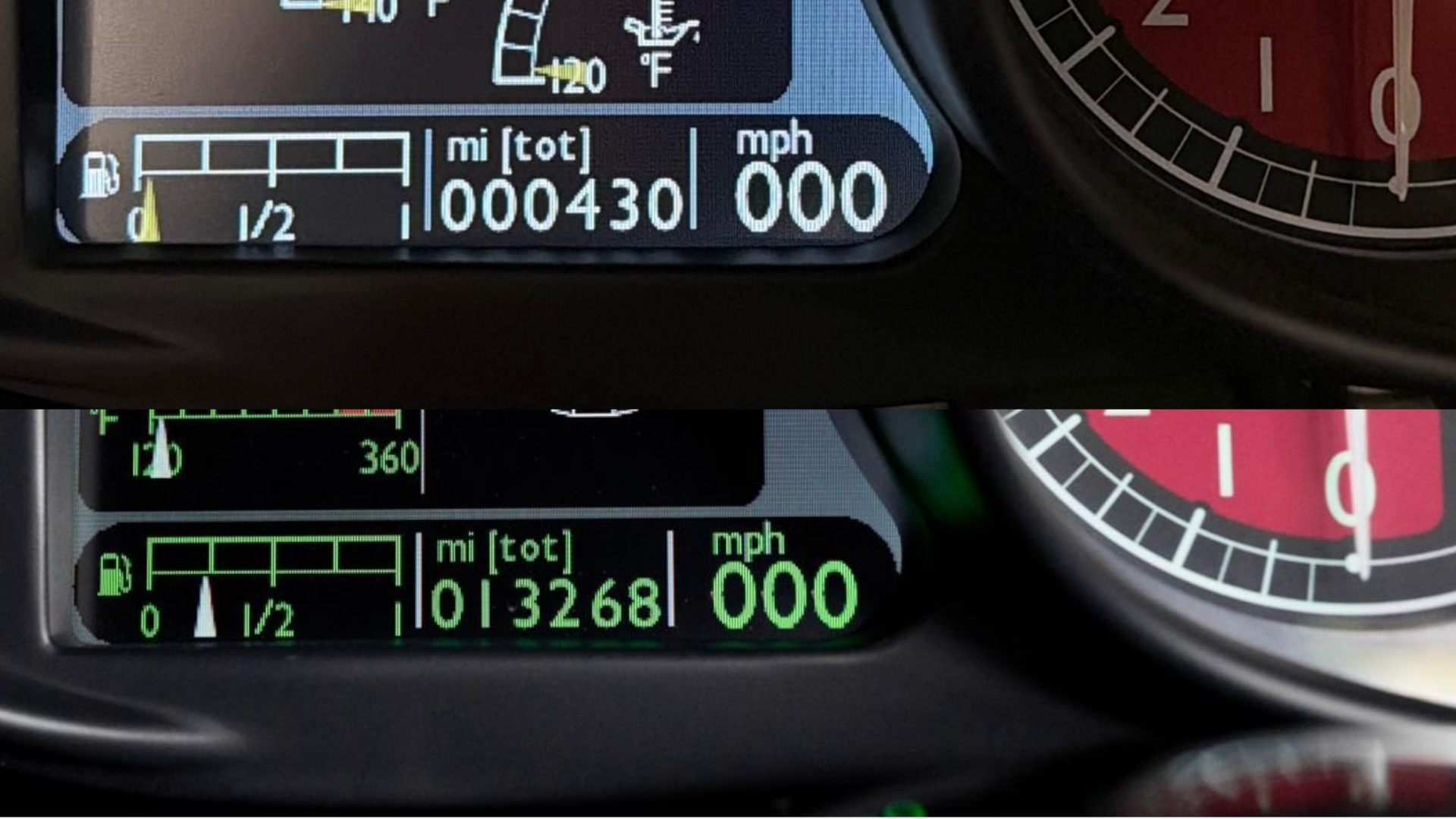
Ten Enzos sold at public auction in 2026, across eleven sales. Sorted by mileage, they do not sort by price. The lowest-mileage Enzo sold all year showed 178 miles and it finished eighth of eleven. Among cars under a thousand miles, results ran from €7.9 million to €15.3 million – the same mileage bracket, twice the money.
And at the other end, our Quail car with 21,353 kilometres beat four Enzos that had covered less, including that 178-mile car.
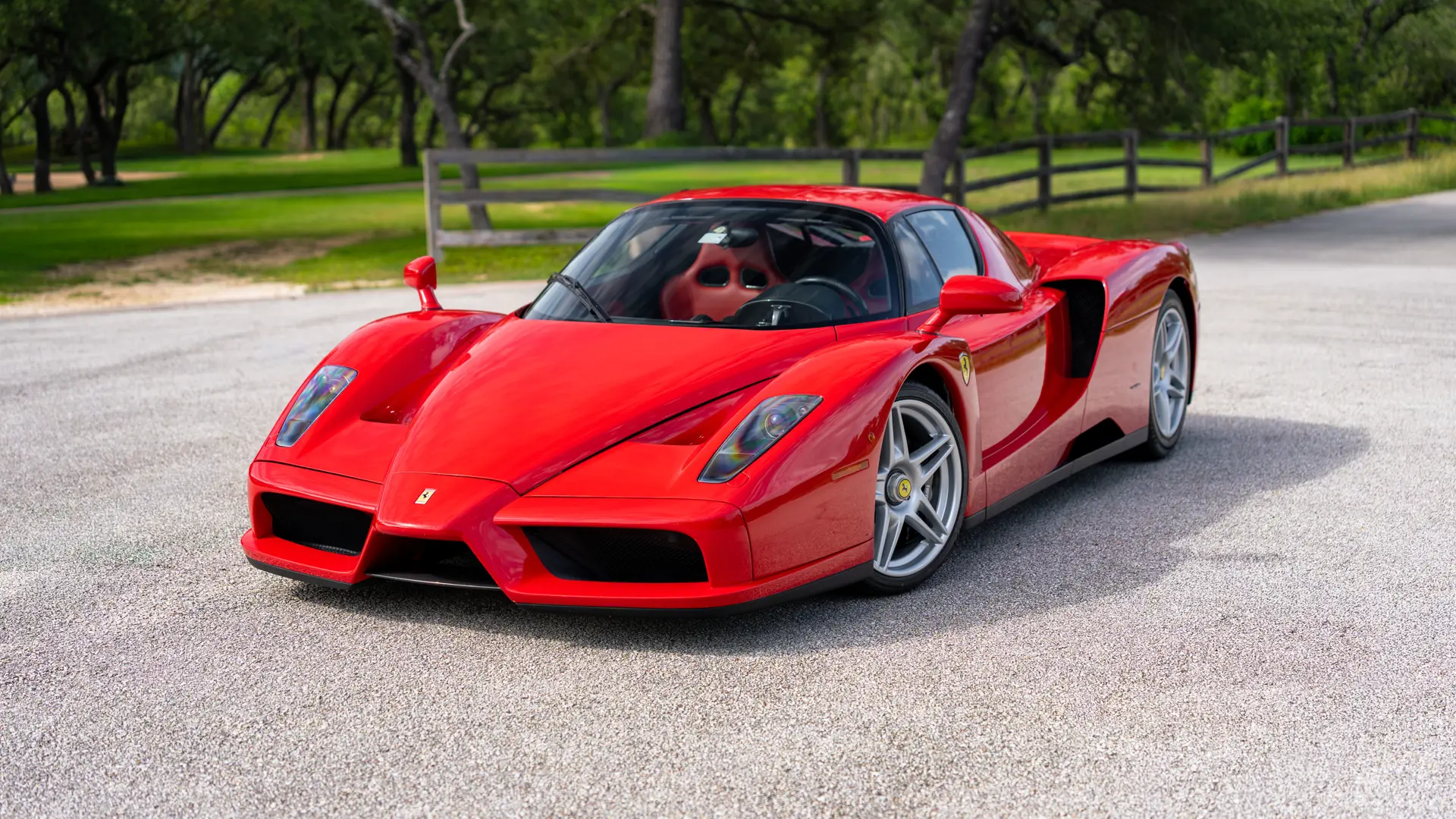
At Monterey the same August week, RM Sotheby’s sold one in Rosso Corsa with 15,826 kilometres – five and a half thousand fewer than the black car. It made €8,045,000, or €1,081,000 less.
Mileage sets a rough floor and a rough ceiling. Inside those, it stops being useful. The rest of the gap is made of things that sound almost too small to matter.
What one owner kept that others did not
Here is where it gets fine-grained, and where most comparisons of this kind quietly cheat.
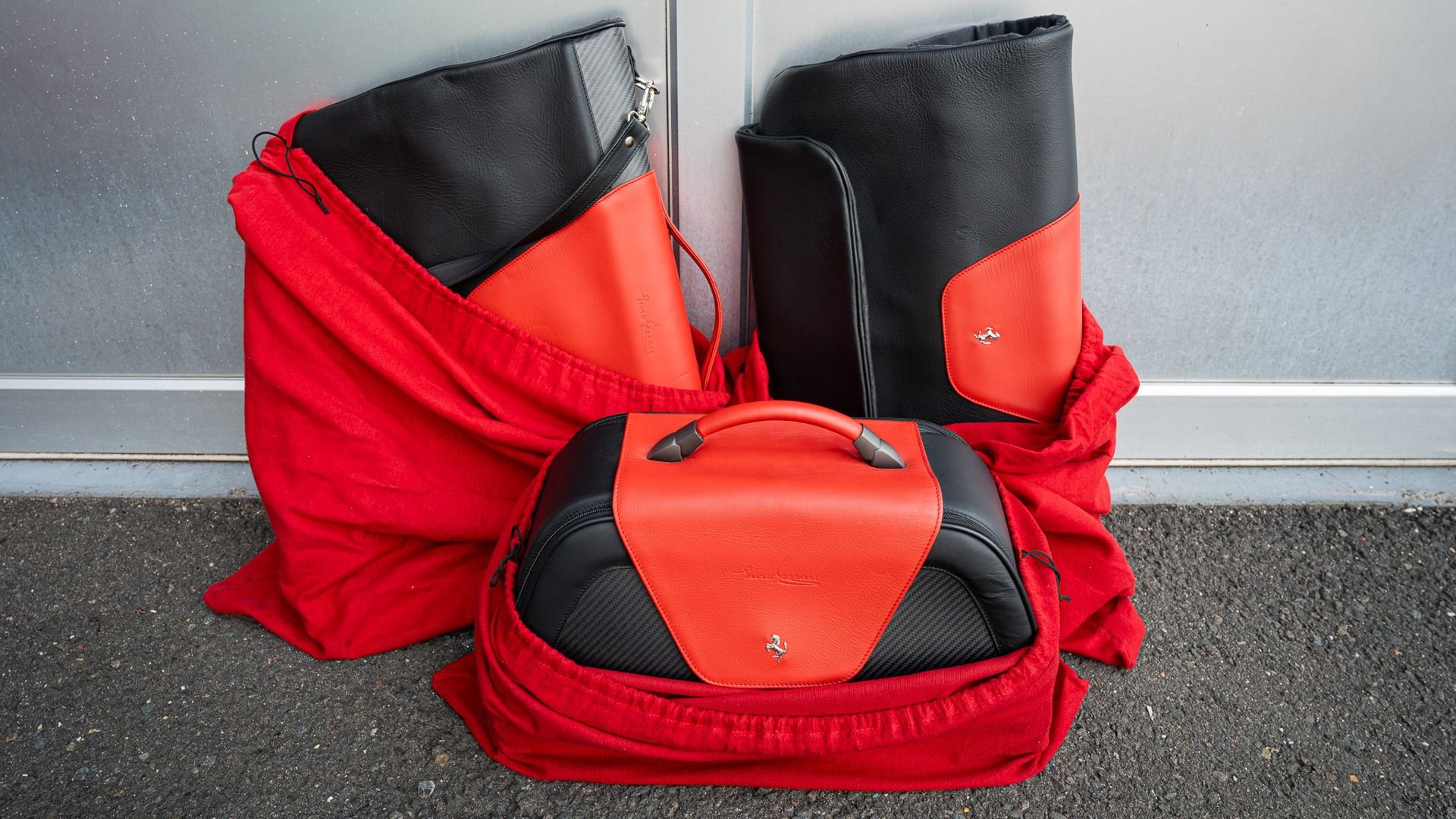
Both cars still have their original fitted luggage, dust bags and all. Both still have their manuals. That is rarer than it sounds – luggage is the first thing to go missing over twenty years.
On this measure the two are level. Anyone telling you the expensive one won because it kept its bags has not looked at the other car.
The difference is smaller, and it is made of paper.
The March auction Enzo came with the dealer’s internal Pre-Delivery Vehicle Checklist – the form a technician ticks before handing a car over, and which is thrown away roughly always. It came with the factory-issued Certificate of Origin, with build photographs attached. And it came with the letter Ferrari sent, congratulating the owner on his purchase in 2003.
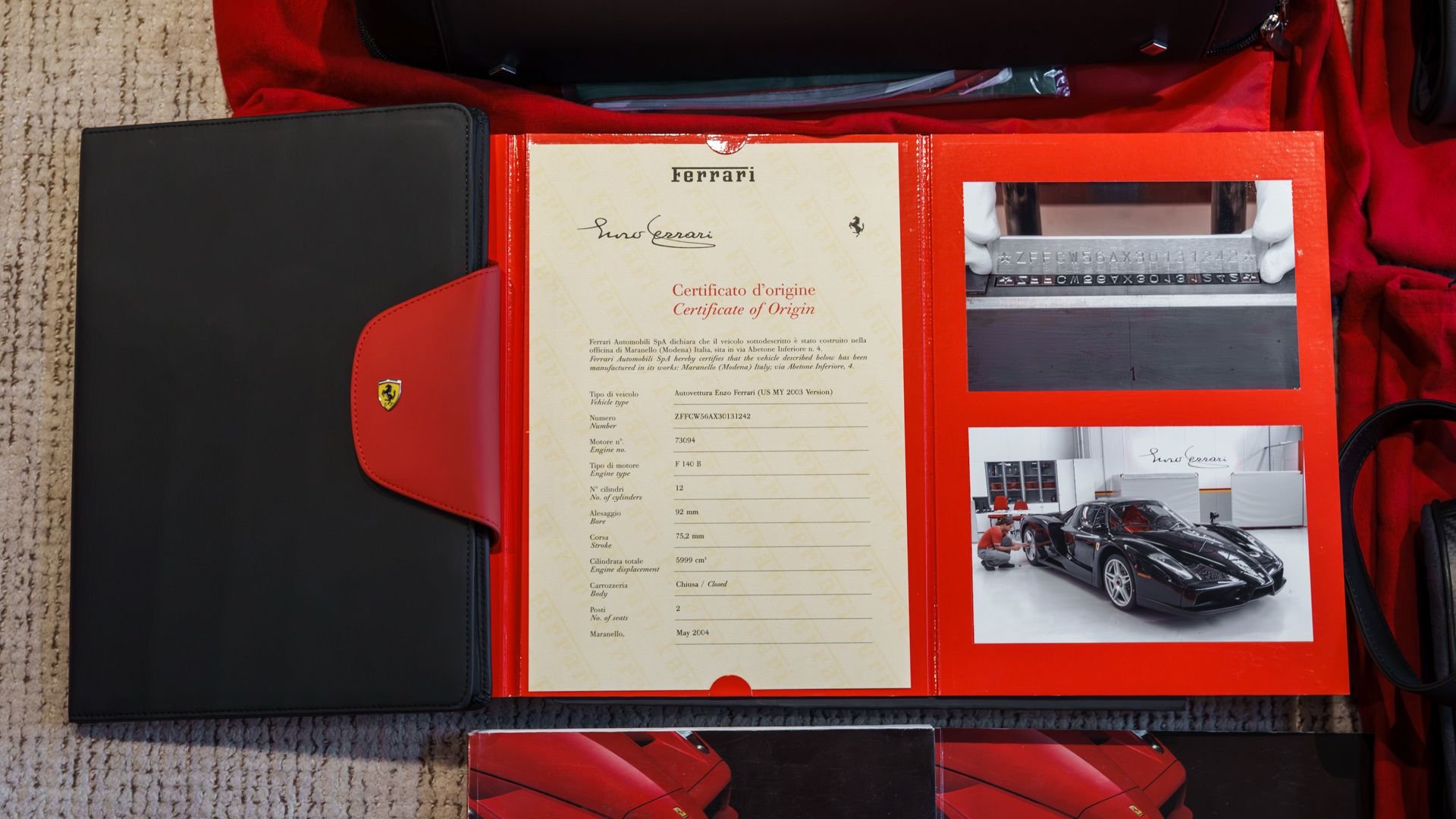
Those are not accessories. They are the residue of a single owner who never had to hand anything on, and they are close to impossible to reassemble once a car has passed through three sets of hands. Luggage can be bought. A dealer’s internal checklist from 2003 cannot.
What that removes is every possible question about the car’s life. No year unaccounted for, no component anyone needs to wonder about, no gap where something might have happened.
Worth saying: the car was not abandoned in a warehouse. Broad Arrow’s catalogue records it as routinely maintained, most recently in November 2024. It was looked after. It just wasn’t driven.
The other one had sticky buttons
The cheaper Enzo had an entirely normal life, which in this context is the unusual part. Three owners, servicing at Ferrari dealers in Newport Beach, then Denver, then Scottsdale, a clean vehicle history report tying the chain together. Its original luggage and manuals, same as the other car. And shortly before the sale, roughly €68,000 of work. Press coverage of the lot listed what it went on: a major service, a rebuilt steering rack, new tyres, refinished exhaust components – and fixing the switchgear.
That last one deserves a moment. Ferraris of this era were finished with a soft-touch coating on their interior switches, and over twenty years that coating degrades and turns tacky. Every early-2000s Ferrari eventually develops sticky buttons. It is one of those flaws the people who own them discuss constantly and nobody else has ever heard of.
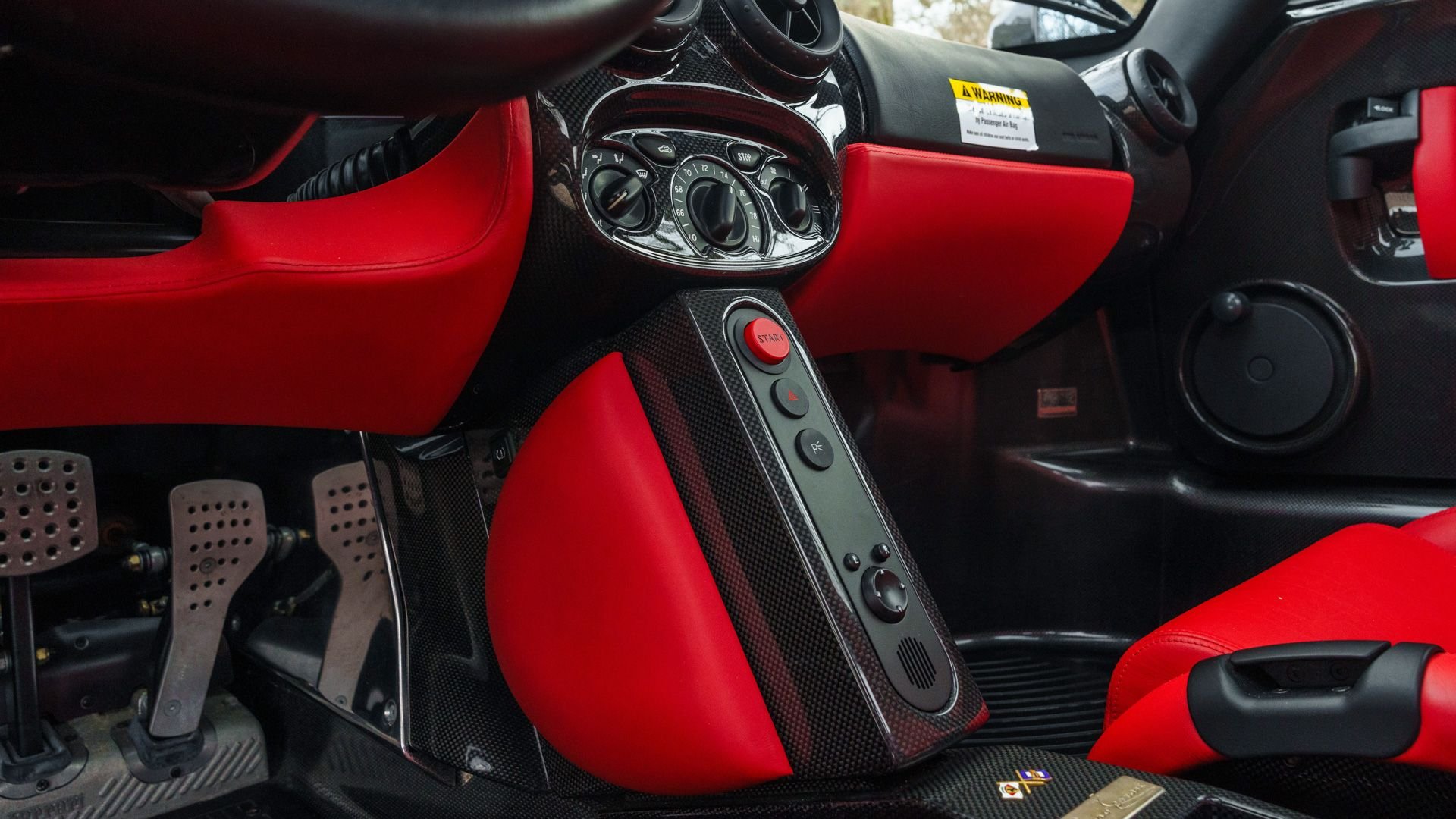
Somebody paid, as part of a €68,000 bill, to have the buttons unstuck on a car that would sell for nine million.
And here is the thing that surprises people: none of that counted against it. A car that has just had €68,000 spent on it is worth more than the same car that still needs it. The work was done, documented, and carried out by the right people. What damages a car is not maintenance – it is maintenance that has been put off, or work nobody can account for.
The black colour and the red leather were worth more than five thousand kilometres
Back to the third car for a moment, because it explains something.
The Monterey Enzo had fewer kilometres than our black car and sold for a million euros less. The difference between them was how they were ordered. The Monterey car is Rosso Corsa, the specification most Enzos wear. These two are two of only three built that way for North America.
The pattern holds across the year. Of the seven most expensive Enzos ever sold, only two wear a colour Ferrari did not offer as standard – and both had far more miles than the cars they beat.
Put plainly: how the car was ordered outranks how far it was driven. Not the paint quality, not the engine, not the condition – the choice a buyer made on an order form in 2003.
Nobody was surprised
Every auction lot is published with an estimate, set in advance by specialists who have read the car’s entire file. The March Enzo was estimated at $12 to $16 million, the August car at $9 to $11 million. Both sold inside their range.
So the €3.9 million was not decided in the room by whoever got carried away. It was worked out months earlier, twice, by professionals reading two folders of paper – and on both days the room agreed with them.
Not entirely, though. The Quail Enzo went to Jesús Ortíz Paz, the 29-year-old frontman of Fuerza Régida. Broad Arrow’s vice-president of auctions called the result “illustrative of the generational shift in collecting and of what today’s collectors really want.“
No catalogue records who is in the room on the day.
The cheaper car was not cheap
At €9,126,000 the Quail Enzo is the sixth-highest Enzo result ever recorded, and it beat four cars with less mileage. In 2024 it would have made a little over a third of that. It only looks modest beside a better car sold at a better moment.
So what did the March car have? One owner instead of three, delivery mileage instead of twenty-one thousand kilometres, and a folder of paper nobody threw away.
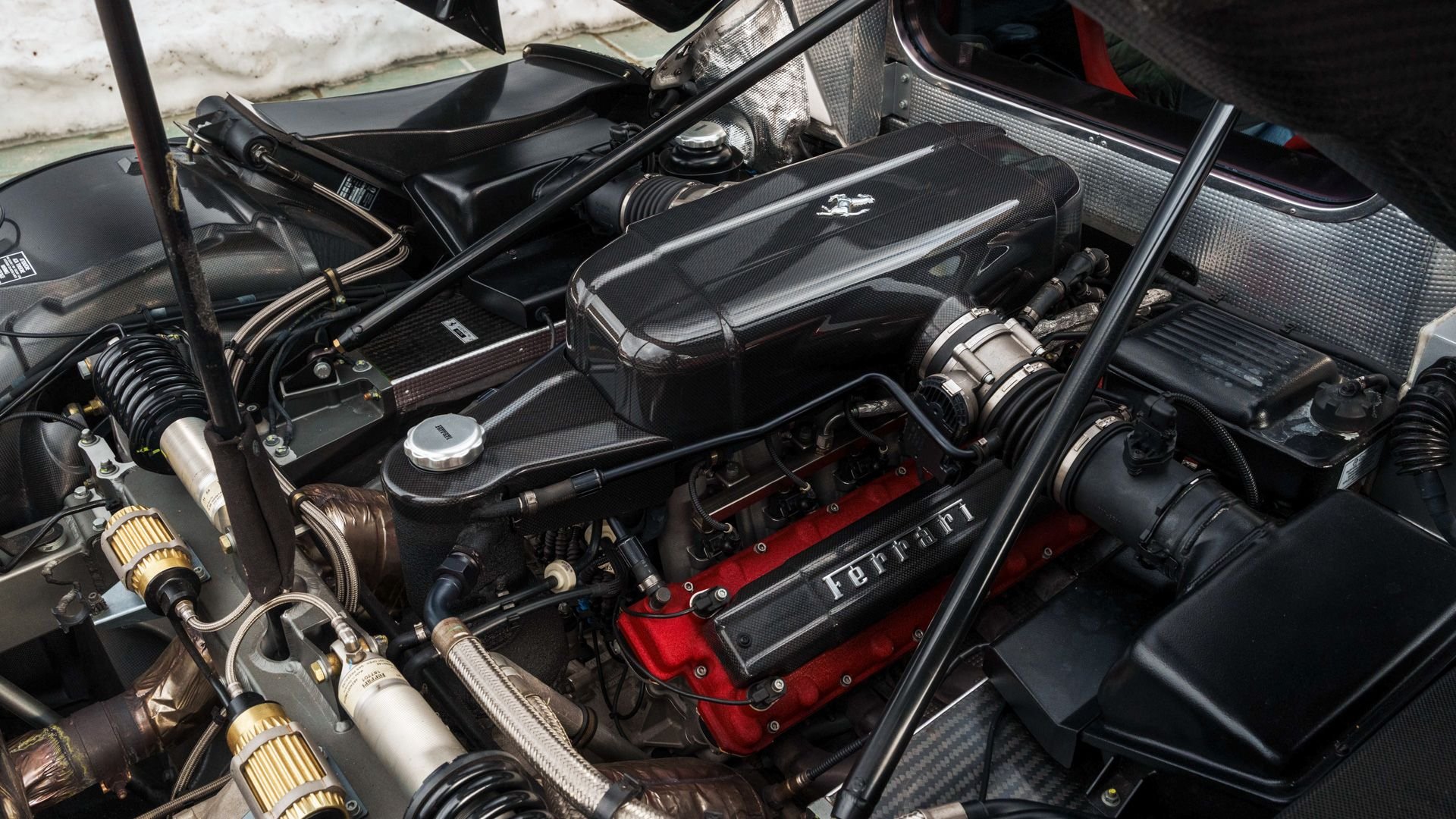
The documents are not what the buyer paid for. They are the reason the buyer could believe it. The rest is the date.
This article is by Commody, a car collecting platform for real, legally registered co-ownership of collectible cars. See what’s in the garage and start collecting from €25.