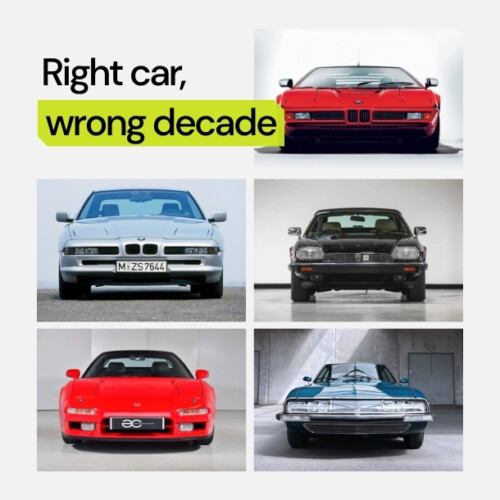
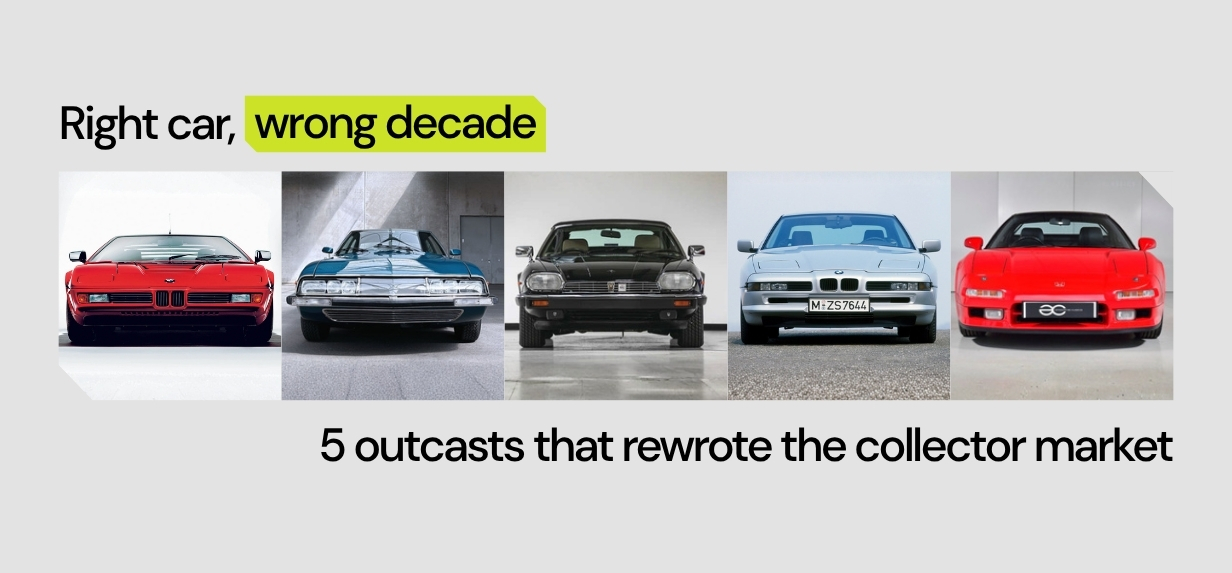
Right car, wrong decade: 5 outcasts that rewrote the collector market
There is a recurring phenomenon in the automotive world: the brilliant machine dismissed in its own era, only to be radically reappraised by a later generation. We are currently expecting this “delayed recognition” cycle to fully unfold with the Porsche 928. While once a controversial departure from the 911 formula, we view this transaxle masterpiece with its perfect 50:50 weight distribution and “landshark” design as a defining piece of automotive history that is finally finding its true market value. You can explore the full technical and historical significance of this bold experiment in our deep dive: Porsche 928 S4 – The boldest turn in the marque’s history.
But the 928 is not the first to suffer the sting of early skepticism. The five icons below have already completed this exact arc, standing as a historical record of what happens when the collector market finally wakes up to what a car always was. From the technological ambition of the Citroën SM to the precise engineering of the Honda NSX, these are the outcasts that have permanently rewritten the collector landscape, proving that timing is everything in the world of automotive acquisitions.
BMW M1: The homologation myth
- Production era: 1978-1981
- Total production: 453 units (399 road, 53 competition)
- Average value: €498,200 | Record sale: €788,000+ (road-going variant)
The BMW M1 is the ultimate expression of a machine built for a purpose that circumstances abruptly denied it. Conceived as a purebred homologation special to qualify Munich’s motorsport programme for Group 4 and Group 5 competition, BMW engineered the M1 as a genuine road car first – though race intent was threaded through every weld and carbon-fibre panel.
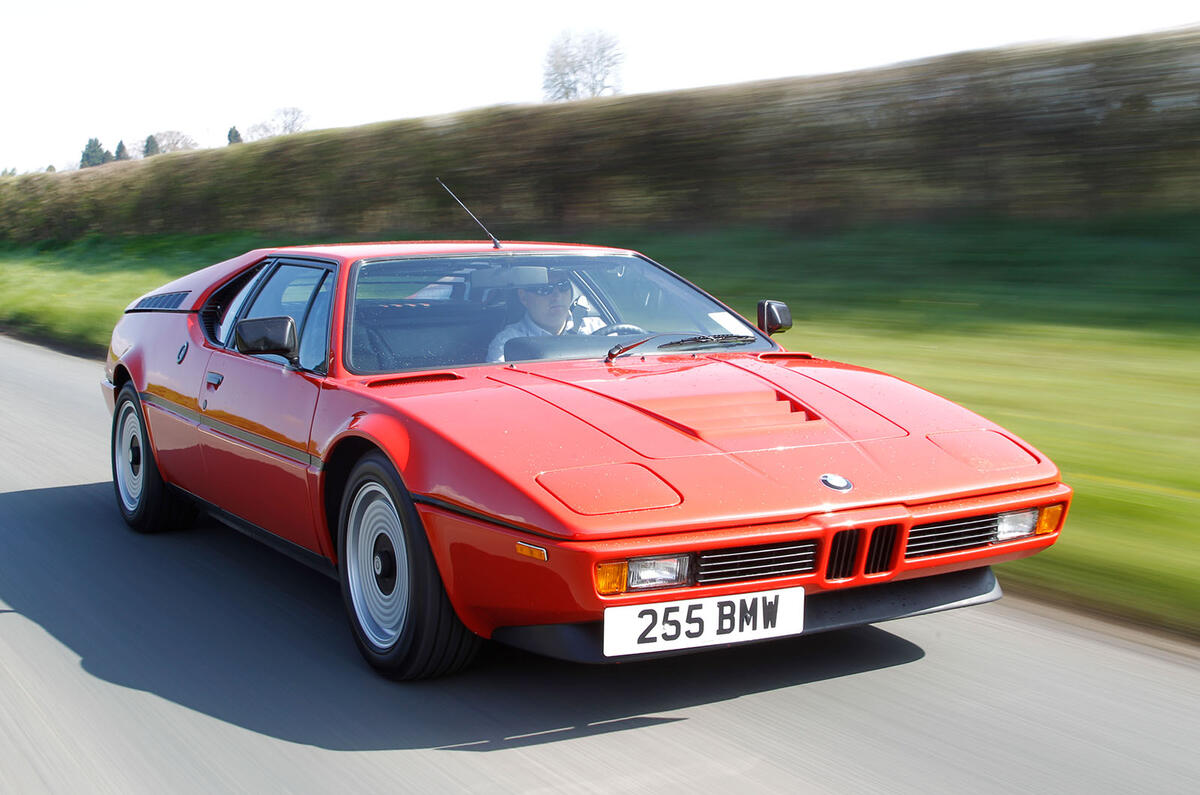
The production path immediately collided with reality. BMW contracted Lamborghini to build the cars, but the arrangement collapsed after Lamborghini encountered serious financial difficulties. Production was hastily rerouted through a chain of smaller Italian coachbuilders before being finished by Baur in Germany. By the time the M1 was ready, the racing class it had been built to dominate no longer existed.
However, the legendary Procar series – a one-make championship run as a support event to Formula 1 in 1979 and 1980 – rescued the car’s competitive ambitions. Watching F1 drivers like Niki Lauda and Mario Andretti race identical M1s gave the car a mid-engine mythology that the original plan might never have produced. Today, the collector market values that mythology accordingly; the most coveted M1s are highly original road cars with strong provenance, particularly those with competition history. The M1 remains BMW M’s first great icon precisely because it had to reinvent itself to achieve greatness.
Citroën SM: The future that would not wait
- Production era: 1970-1975
- Total production: 12,920 units
- Average value: €33,200 | Record sale: €201,700 (£174,632) for an exceptional, highly documented example
The Citroën SM feels like a car plucked from an alternate, hyper-advanced timeline. It dared to combine high-pressure hydropneumatic suspension, front-wheel drive, a quad-cam Maserati V6, and the revolutionary steering into a grand tourer that was less a consumer product and more a radical manifesto.
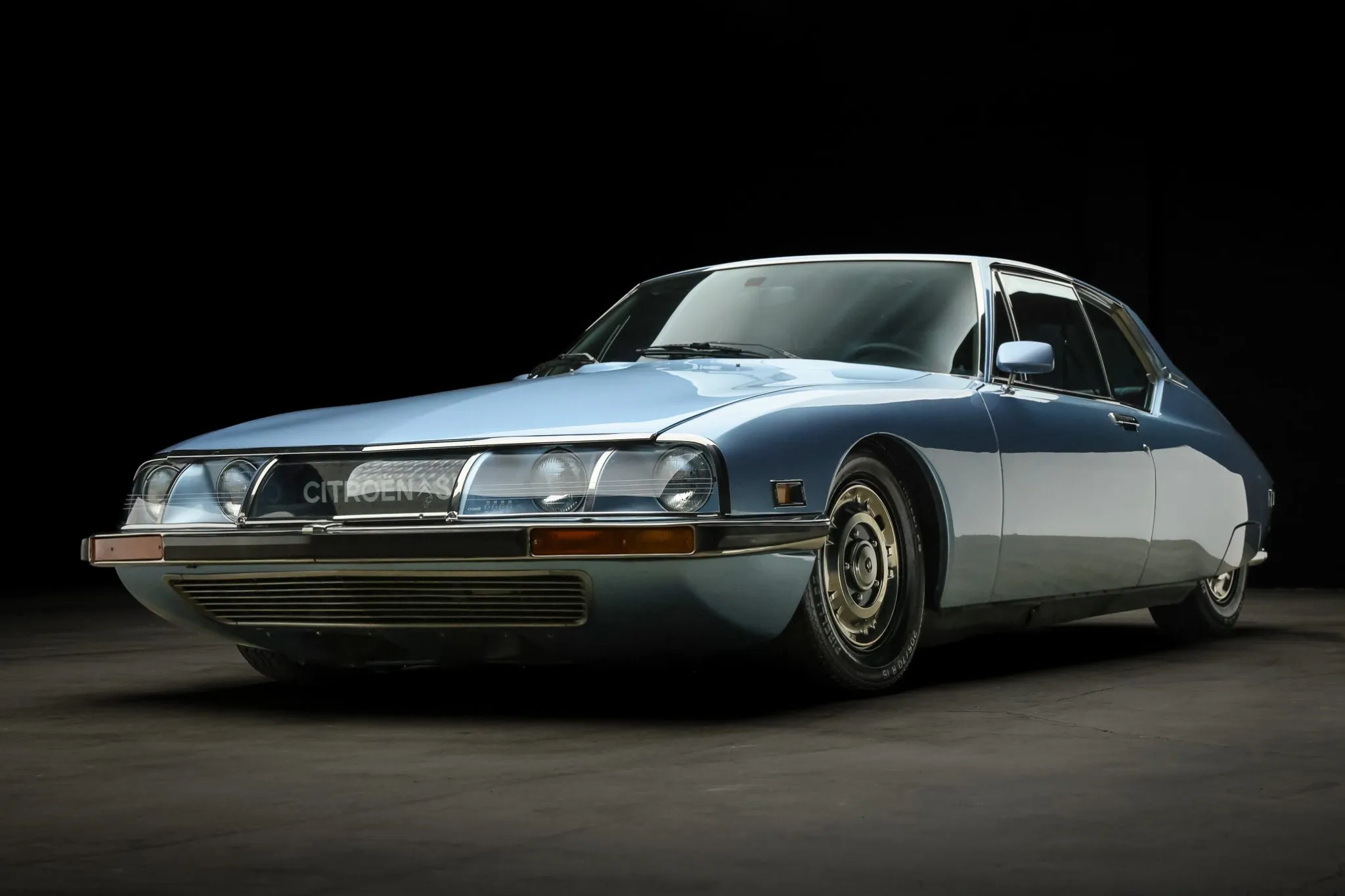
The car’s avant-garde aesthetic, defined by its aerodynamic glass-covered nose, truncated tail, and partially enclosed rear wheels, made it look less like a commodity and more like a craft from a futuristic era. It was a machine that refused to compromise on its own logic. The hydropneumatic suspension – a Citroën-developed system using pressurised fluid rather than conventional steel springs – gave the car an eerie, magic-carpet ride quality that flattened the earth in a way contemporary steel-sprung rivals could not match. Meanwhile, the DIRAVI steering isolated the driver entirely from harsh road kicks by using high-pressure fluid against a specialised internal heart-cam to force the wheel back to centre. It was speed-sensitive and self-centring, requiring almost no effort at low speeds and growing progressively firmer as the car accelerated.
That uncompromising ambition, however, carried heavy consequences. The complexity of the hydropneumatic system and the Maserati engine made the SM a difficult sell at a time when the mid-1970s oil crisis paralysed the luxury market. Citroën fractured, Maserati was sold off, and the SM project ended with it. The cars that matter most to collectors today are original, well-sorted manuals with correct European specification and proper service history, because the SM’s entire character depends on the systems that once made it seem too strange to succeed.
Jaguar XJ-S: Outliving first impressions
- Production era: 1975-1996
- Total production: 115,413 units
- Average value: €12,100 | Record sale: €120,500 for a rare, low-mileage 1989 5.3 V12 Convertible
The Jaguar XJ-S is proof that collector standing does not require absolute scarcity. As Jaguar’s flagship grand tourer for over two decades, its launch coincided with the worst possible moment: a global energy crisis hostile to thirsty V12 engines, and the impossible cultural burden of replacing the legendary E-Type. It was explicitly not an E-Type, no car could have been, and buyers said so immediately.
The Jaguar XJ-S is proof that collector standing does not require absolute scarcity. As Jaguar’s flagship grand tourer for over two decades, its launch coincided with the worst possible moment: a global energy crisis hostile to thirsty V12 engines, and the impossible cultural burden of replacing the legendary E-Type. It was explicitly not an E-Type – no car could have been – and buyers said so immediately.
What the XJ-S actually was – a refined, ultra-high-speed, long-distance grand tourer with a character distinct from the E-Type – took twenty years to separate from the ghost of its predecessor. Today, that separation is absolute and the market has fully legitimized the XJ-S as a proper grand tourer in its own right.
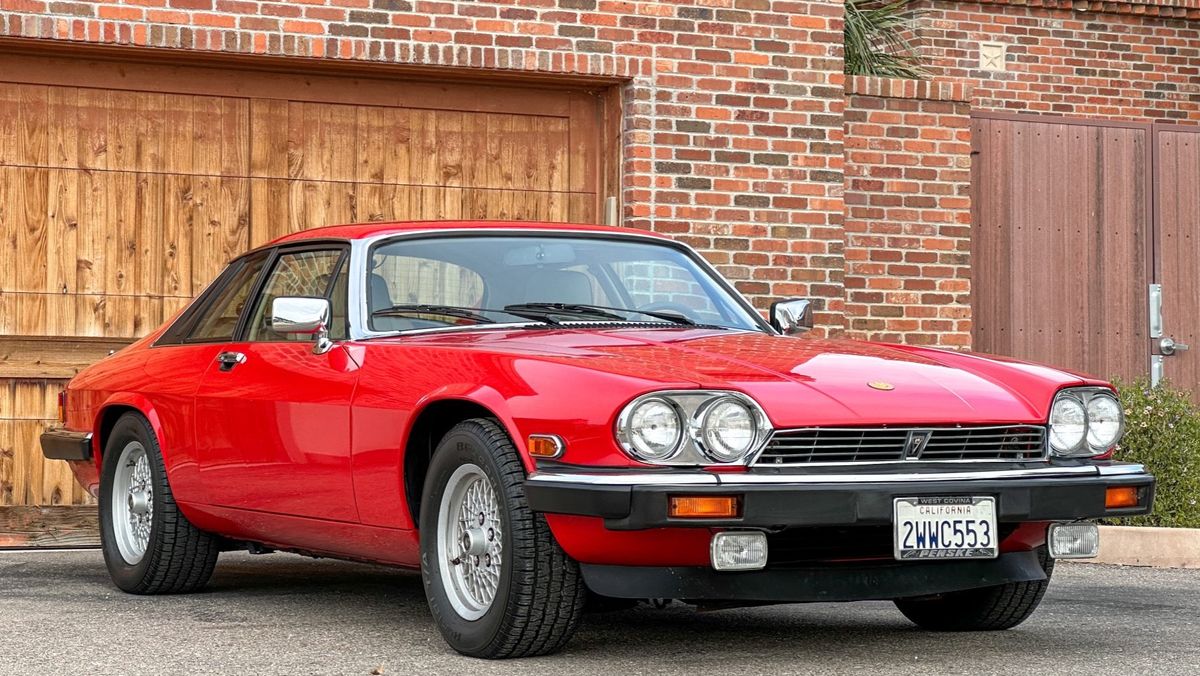
While the pricing floor remains accessible for high-mileage cruisers, the ceiling is dictated by strict specification and low production numbers. The most desirable examples are well-defined: early V12 coupes, XJ-SC targa and convertible versions, and the low-volume special editions that occupy the top of the market. The XJR-S Le Mans Celebration, produced in just 100 examples to mark Jaguar’s 1988 Le Mans victory, is among the most sought-after; the XJR-S, Celebration, and Collection variants all attract disproportionate collector attention relative to the standard car. Ultimately, while the floor remains highly accessible, the ceiling is entirely determined by specification, low production volumes, and clear historical provenance.
The BMW E31: a masterpiece waiting for the world to catch up
- Production era: 1989-1999
- Total production: 30,621 units
- Average value: €36,500 | Record sale: €152,400 for rare, top-tier variant
The BMW E31 8 Series was engineered without a budget, built as a technological showcase. It was BMW’s flagship coupe: with a dramatic CAD-designed wedge shape, pop-up headlights, V12 power, and advanced electronics, it arrived as the most technically complex car the company had ever brought to market.
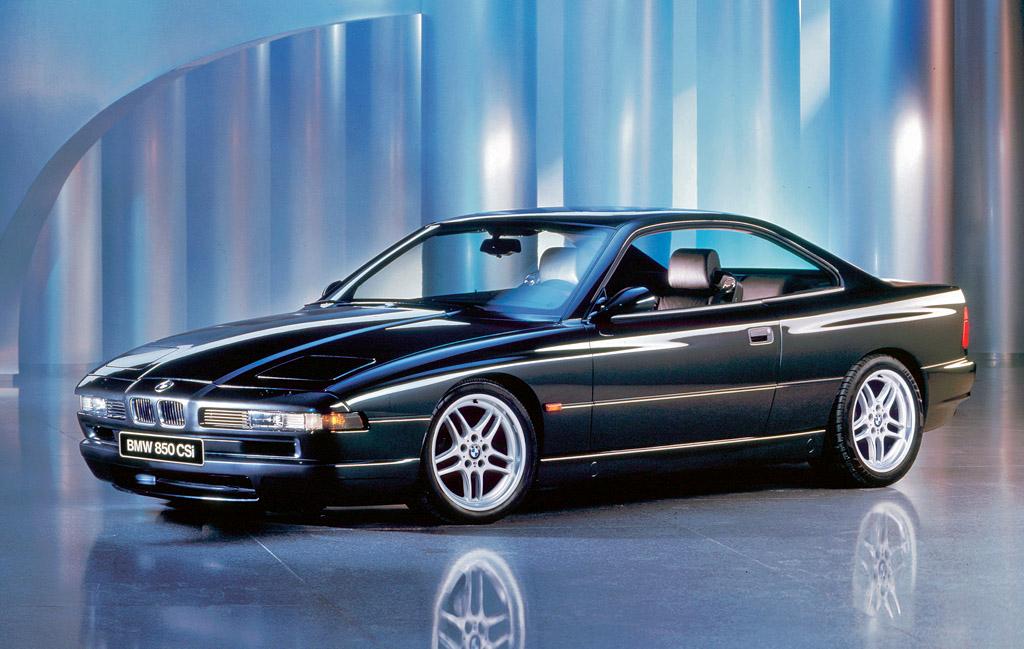
Yet, the market did not quite know what to make of it. The E31 was expensive, complex, and designed to express a kind of cool, high-speed luxury that did not align with what BMW buyers of the late 1980s and early 1990s expected from the brand. It was not an agile sports car like the M3, nor was it a traditional luxury car like the 7 Series either. It sat between the two with considerable technical conviction and no easy category to land in. That ambiguity worked against the E31 – its price tag and the economic recession of the early 1990s led to its commercial struggle.
Decades later, the collector market has corrected that initial hesitation. The 850CSi – the highest-performance variant featuring a 5.6-litre S70 engine and a manual transmission – dominates the collector interest and investments, alongside the ultra-rare Alpina B12 5.0 and 5.7 specials. The E31 is now widely understood as a masterpiece that was simply waiting for the world to catch up.
Honda NSX: The supercar that rewrote the playbook
- Production era: 1990-2005 (Gen 1)
- Total production: approx. 18,685 units
- Average value: €67,800 | Record sale: €934,375 for a 2003 Gen-2 NSX-R
In 1990, the Honda NSX arrived with a specific, disruptive argument: that a supercar could be blisteringly fast, reliable, and genuinely usable without surrendering its exotic identity. Honda didn’t set out to make a louder supercar; they set out to make a more precisely engineered one. Its all-aluminium monocoque structure, high-revving 8,000-rpm V6 featuring titanium connecting rods, and obsessive chassis development – famously honed by Formula 1 legend Ayrton Senna at Suzuka – were all in service of a machine that could be driven to its limits daily without mechanical drama.
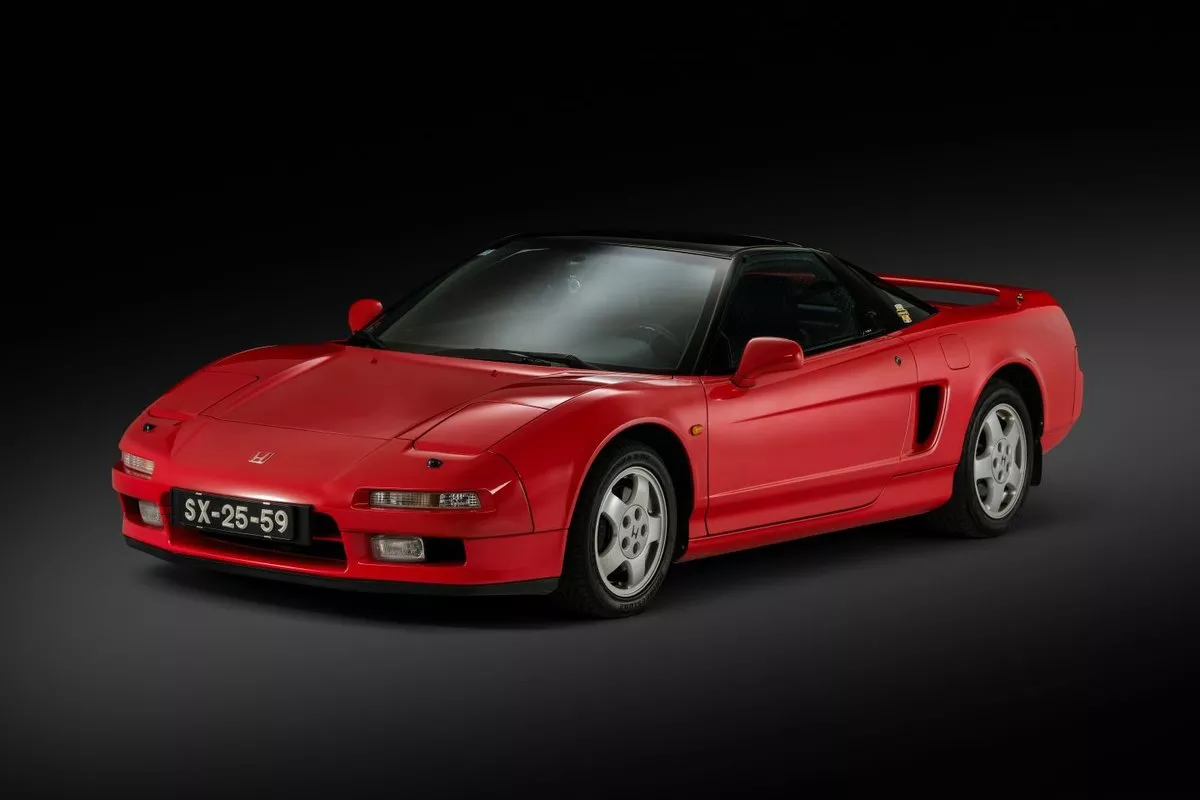
That level of daily-driver refinement made the NSX seem almost too rational for the dramatic, theatrical supercar culture of its moment, which was heavily defined by heavy clutches, overheating engines, and unpredictable snap-oversteer. The NSX offered precision instead, causing some period purists to dismiss it as ‘too clinical’.
While the legendary first generation established the car’s purist credentials, Honda eventually evolved the NSX into a technologically complex, twin-turbocharged hybrid all-wheel-drive platform for its second generation (2016–2022), demonstrating a completely different era of engineering ambition.
In the collector market, standard manual-gearbox NA1 cars form the highly desirable bedrock of the market, but the ultra-rare, track-focused Japanese domestic market (JDM) variants have recently shattered historical ceilings. Alongside low-volume gems like the 49-unit US-market Zanardi edition and the late-production Type S, the NSX has permanently rewritten what collectors are willing to pay for Japanese engineering excellence. This peak was underscored when an immaculate, facelifted 2003 (NA2) NSX-R shattered all historical benchmarks with a monumental million-dollar-plus (€934,375) result at Broad Arrow’s Villa d’Este auction. Time has proven Honda entirely right; the NSX permanently altered what a supercar was allowed to be, and the market is finally pricing in that lesson.
The collector market does not always reward engineering genius or design originality upon initial arrival – it takes time for the noise of marketing failures, economic recessions, and unfair comparisons to fade away. These five cars proved it the hard way, and they stand as a reminder that the market, eventually, always gets it right. Keep your eyes on the 928.
This article is by Commody, a car collecting platform where anyone can become a real, legally registered co-owner of exceptional collectible cars from €25. See collectible cars and start collecting →