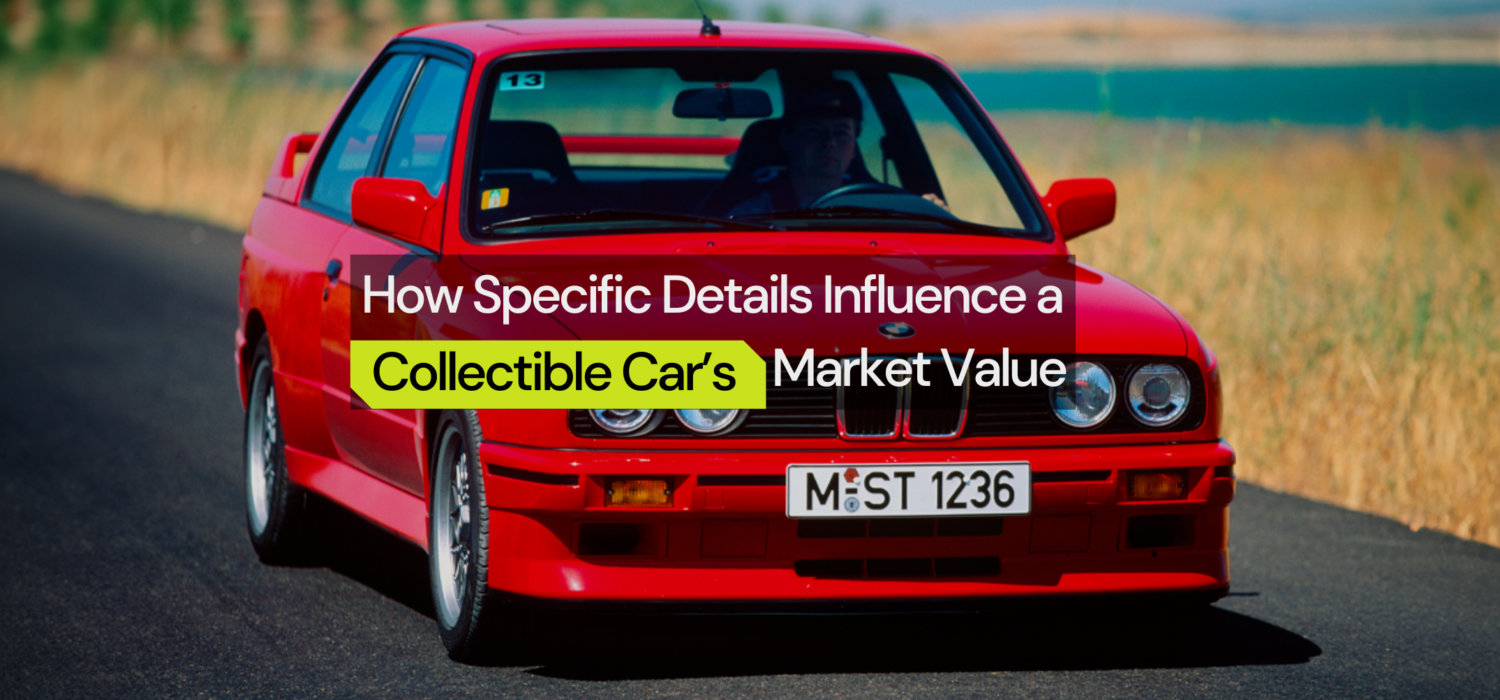
How Specific Details Influence a Collectible Car’s Market Value
Collector-car value isn’t shaped only by a model’s history or its technical specifications. Very often, it’s defined by details that seem minor at first glance – yet they’re exactly what sets a car apart and gives it a clear identity. Provenance, factory specification, rarity, and engineering choices each carry real weight in the market.
Below are 10 examples of how specific factory specs can create a meaningful difference in value.
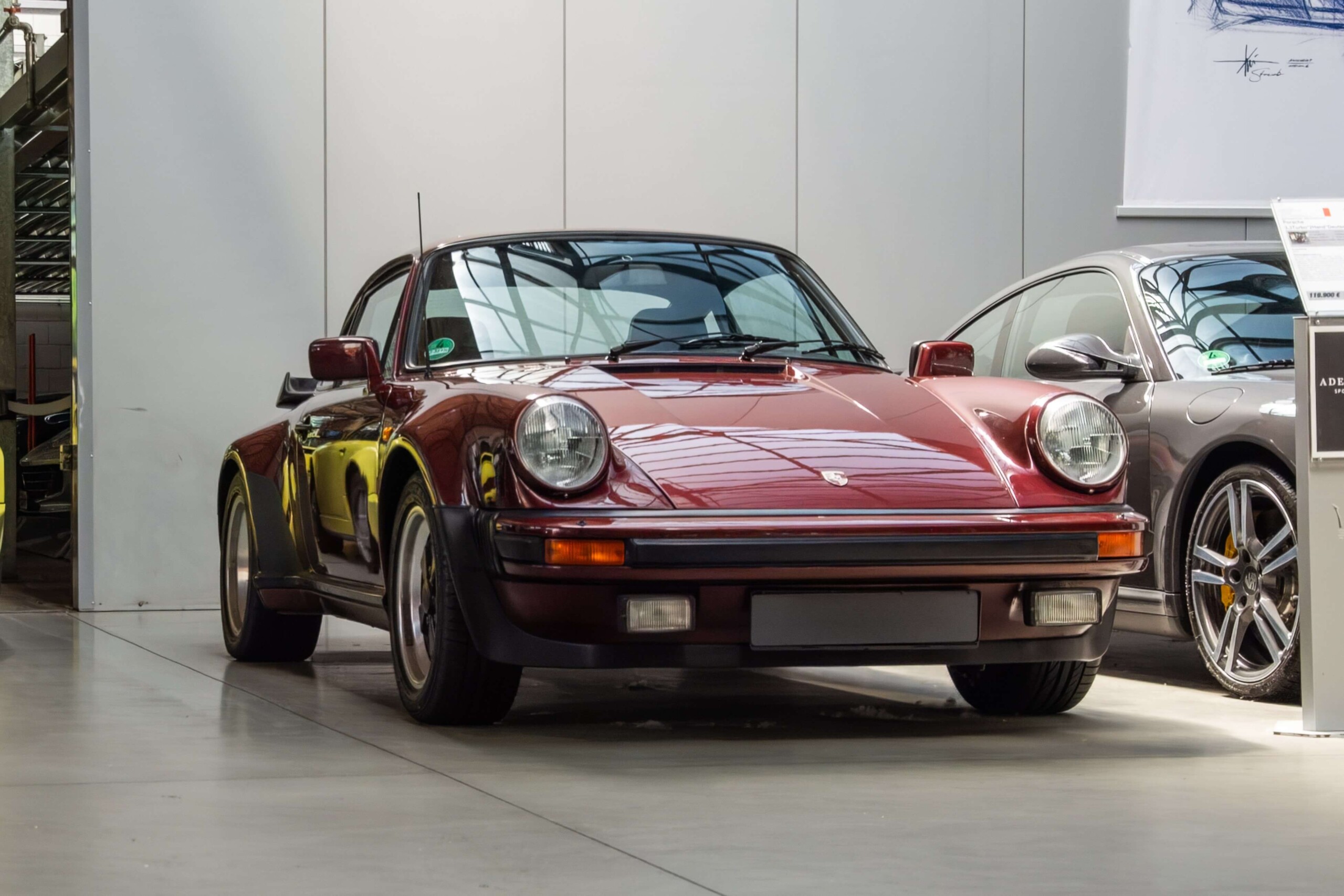 Porsche 930 Turbo
1. Porsche Tiptronic transmission
Porsche’s Tiptronic automatic transmission was advanced and convenient for its time. It added comfort, but in the collector market it is generally valued less than a manual gearbox. As a result, 911 and 930 models equipped with Tiptronic often sell for 15–30% less than comparable cars with a manual transmission.
The manual version preserves the model’s character and aligns better with the period context. That is why it consistently attracts stronger demand.
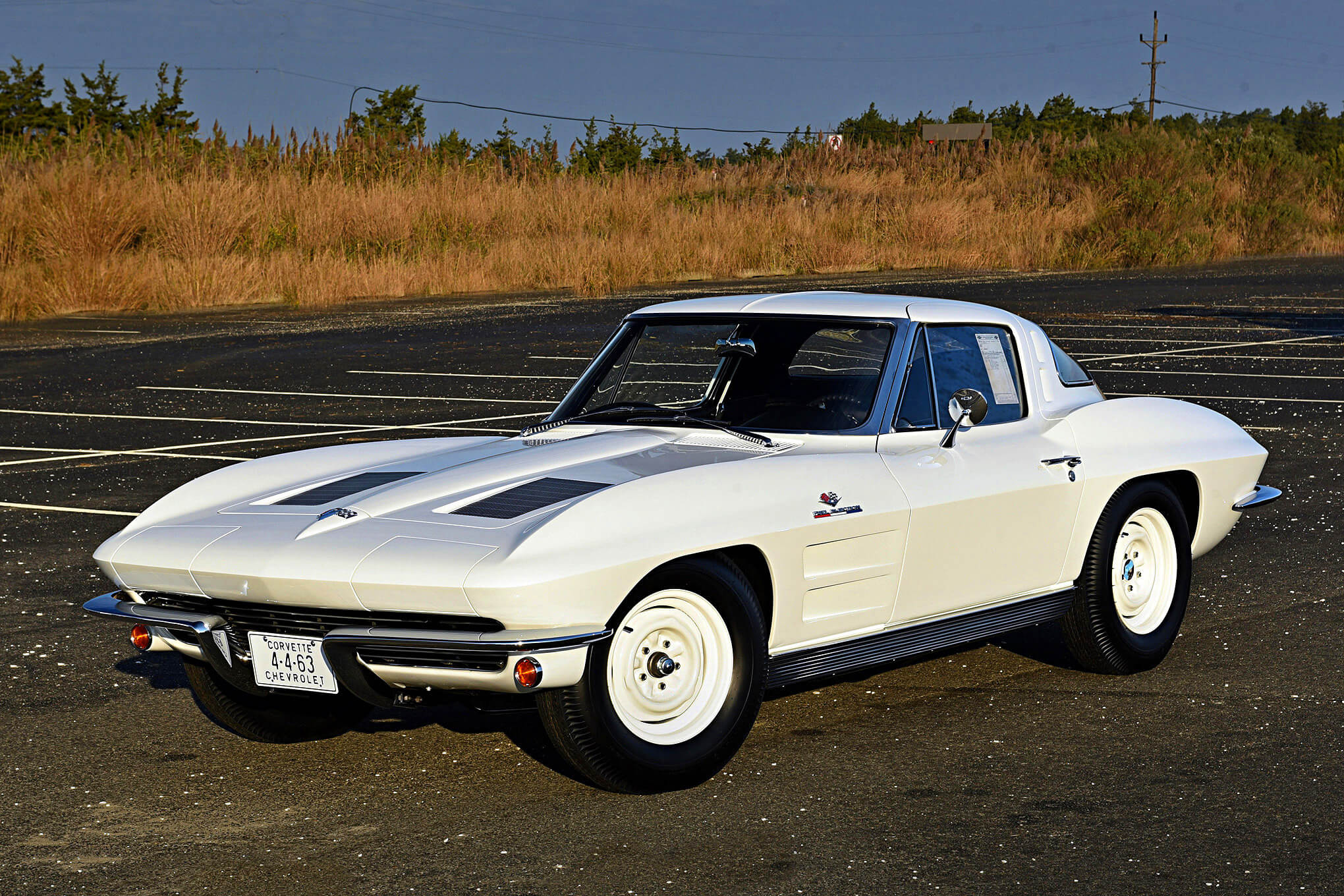
2. Corvette Z06 „Big Tank“ specification
One of the key value drivers of the 1963 Corvette Z06 is the larger, race-intended 36-gallon fuel tank (instead of the standard 22), known as the “Big Tank.” Fewer fuel stops meant less time lost, so the option had a clear functional purpose.
In today’s market, the gap is especially visible. “Big Tank” cars can be roughly €100,000 more expensive than standard Z06 examples. It’s a limited specification that signals true competition intent, which keeps supply tight and values consistently higher.
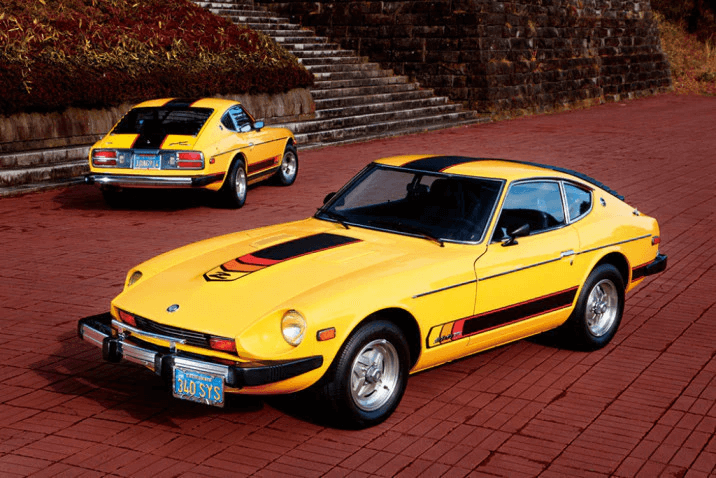
3. Datsun 280Z ZZZAP & Black Pearl versions
The Datsun 280Z was produced in large numbers, but the special ZZZAP! and Black Pearl versions hold a clear value advantage. They came with bold colors and distinctive paint treatments offered only on these editions.
Their identity was established from day one and remains instantly recognizable today. With limited availability, these cars often trade for 30–40% more than a typical 280Z. Values are reinforced by an active enthusiast base that assigns these editions genuine cultural weight.
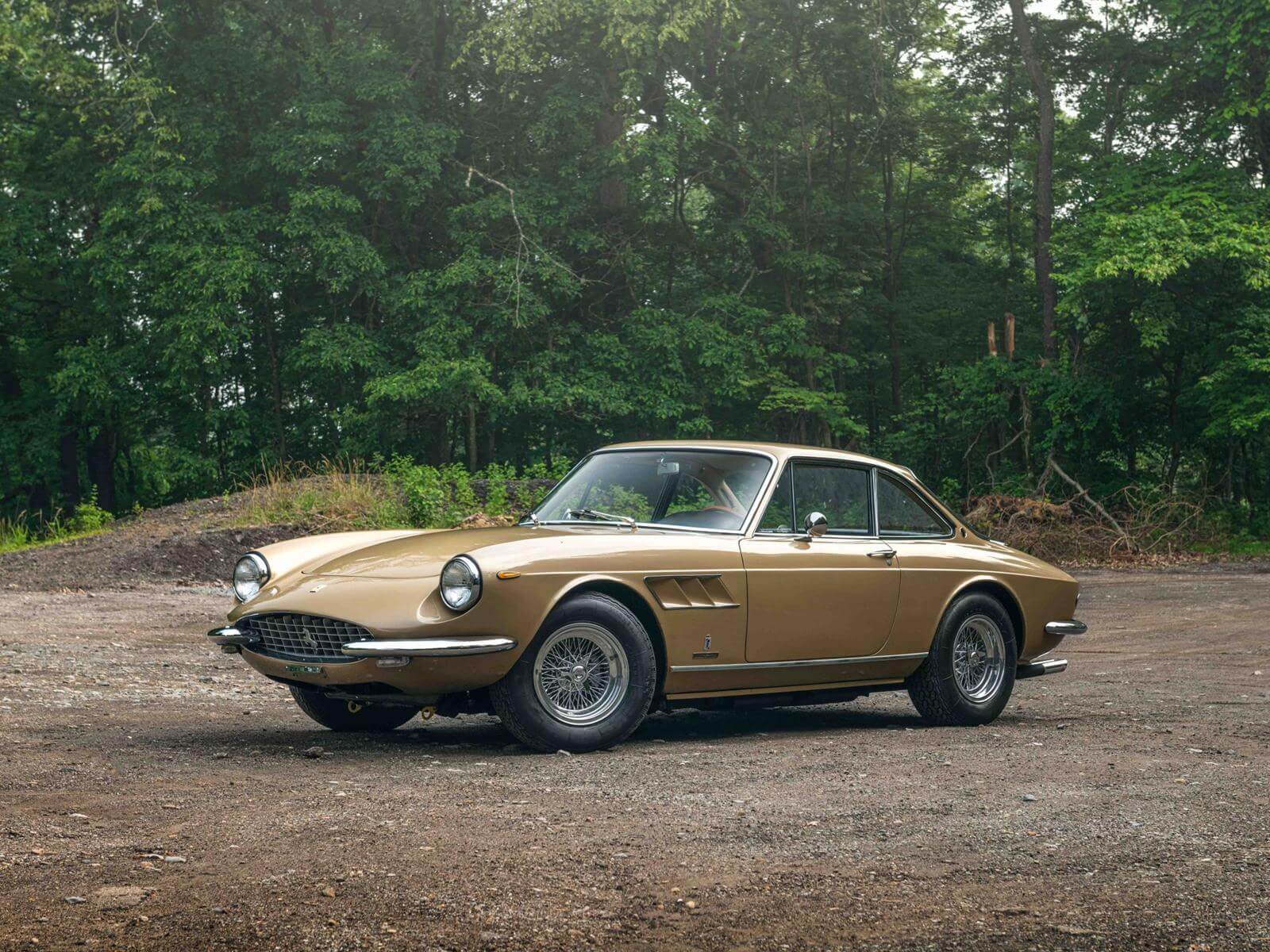
4. Ferrari 330 GTC with Factory A/C
On Ferrari 330 GTC models, factory air conditioning can create a meaningful value difference today. In the late 1960s, A/C was rare and expensive, so only a portion of cars were ordered with it.
Examples retaining an authentic factory system often command around €60,000 more than otherwise identical cars without it. The premium is rooted in original specification, which remains a key collector criterion. Later-installed systems do not carry the same credibility.

5. Rolls-Royce Silver Cloud RHD versions
In the Rolls-Royce Silver Cloud market, left-hand-drive (LHD) cars are typically valued higher than right-hand-drive (RHD) versions. This is particularly evident in Europe and North America, where most collectors prefer LHD.
As a result, RHD Silver Clouds often sell for 30-40% less. LHD cars have a wider buyer base and tend to hold value better, so RHD examples – despite their quality – are usually less liquid.
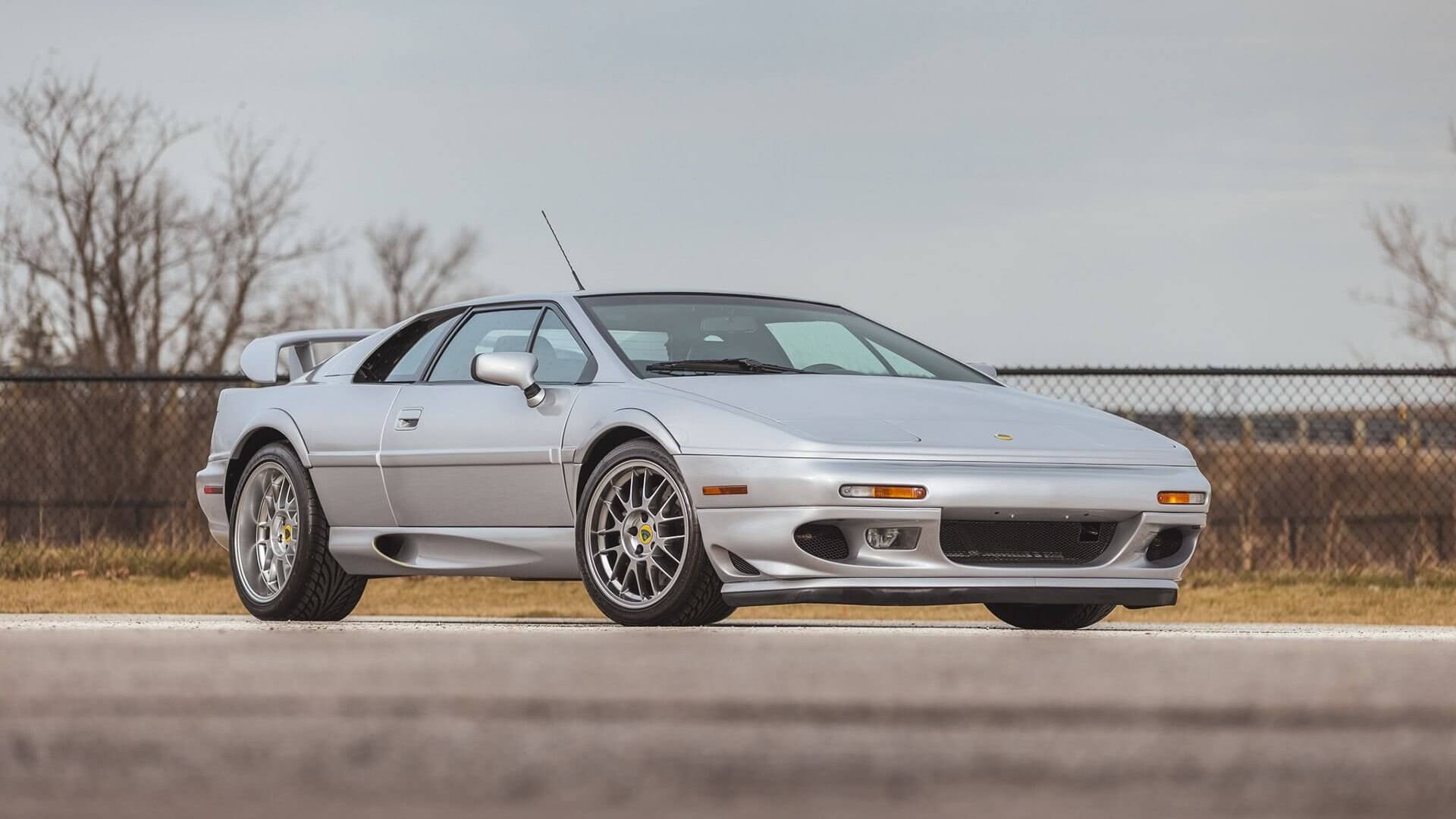
6. Lotus Esprit 25th Anniversary version
The Lotus Esprit is one of Britain’s longest-running sports car lines. The 25th Anniversary Edition, released in 2002, was among the final chapters of the series. It featured a twin-turbo V8, around 350 hp, and a five-speed manual gearbox—an increasingly rare combination within the Esprit range at the time.
These cars typically sell for more than standard Esprits. In many cases, the premium is 25–35%. Well-kept examples with low mileage and clean documentation are often sold for about €60,000 or more.
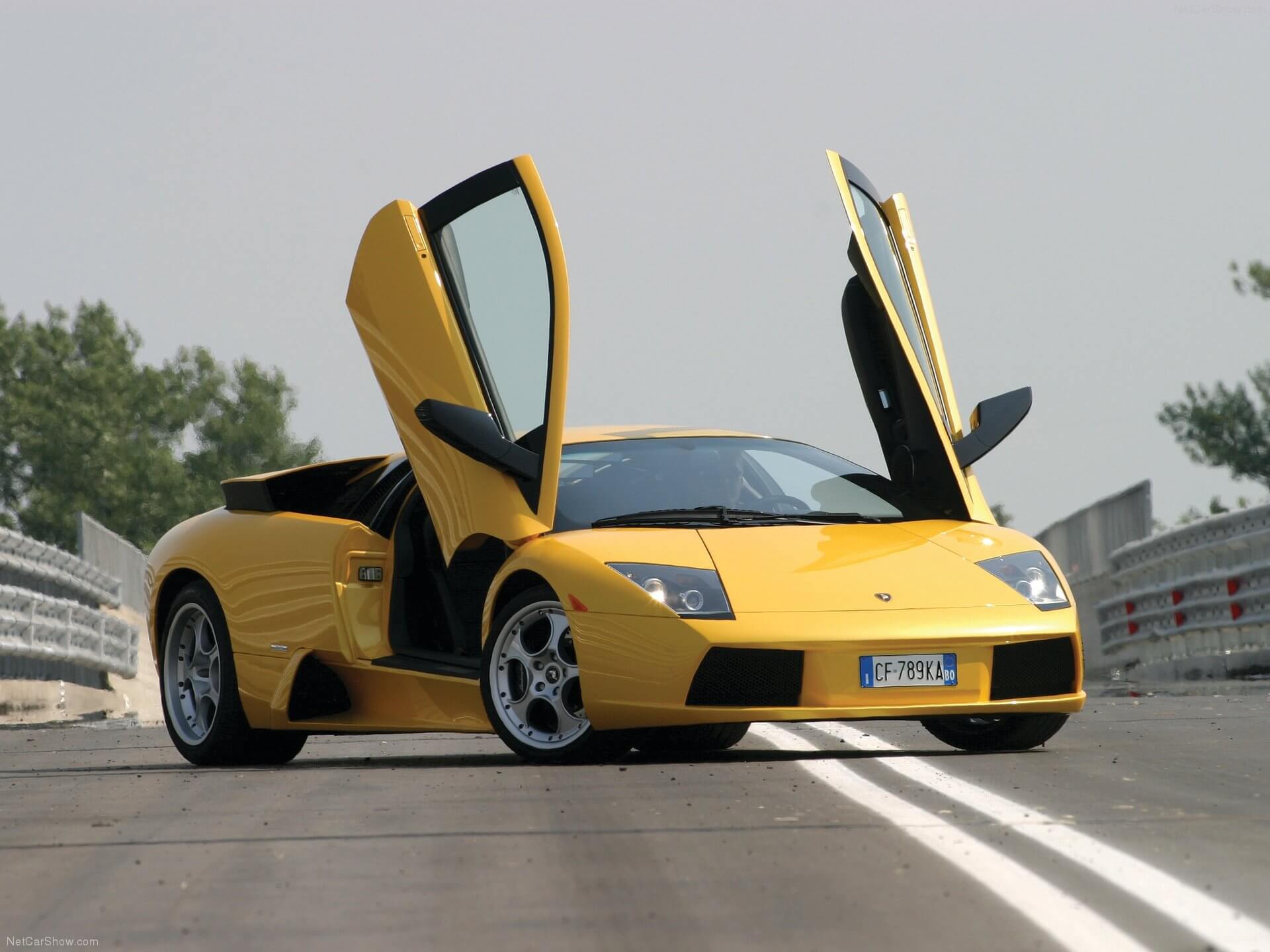
7. Lamborghini Murciélago with manual gearbox
On the Murciélago, the manual gearbox was ordered infrequently, so genuine manual cars are scarce. Most buyers chose the E-Gear transmission, which became the brand’s default solution.
That rarity translates directly into price: manual versions can be two to three times more expensive than comparable E-Gear cars. This is one of the last V12 supercars available with a true manual, which keeps demand strong. Over the long term, these examples tend to appreciate faster than the automated versions.
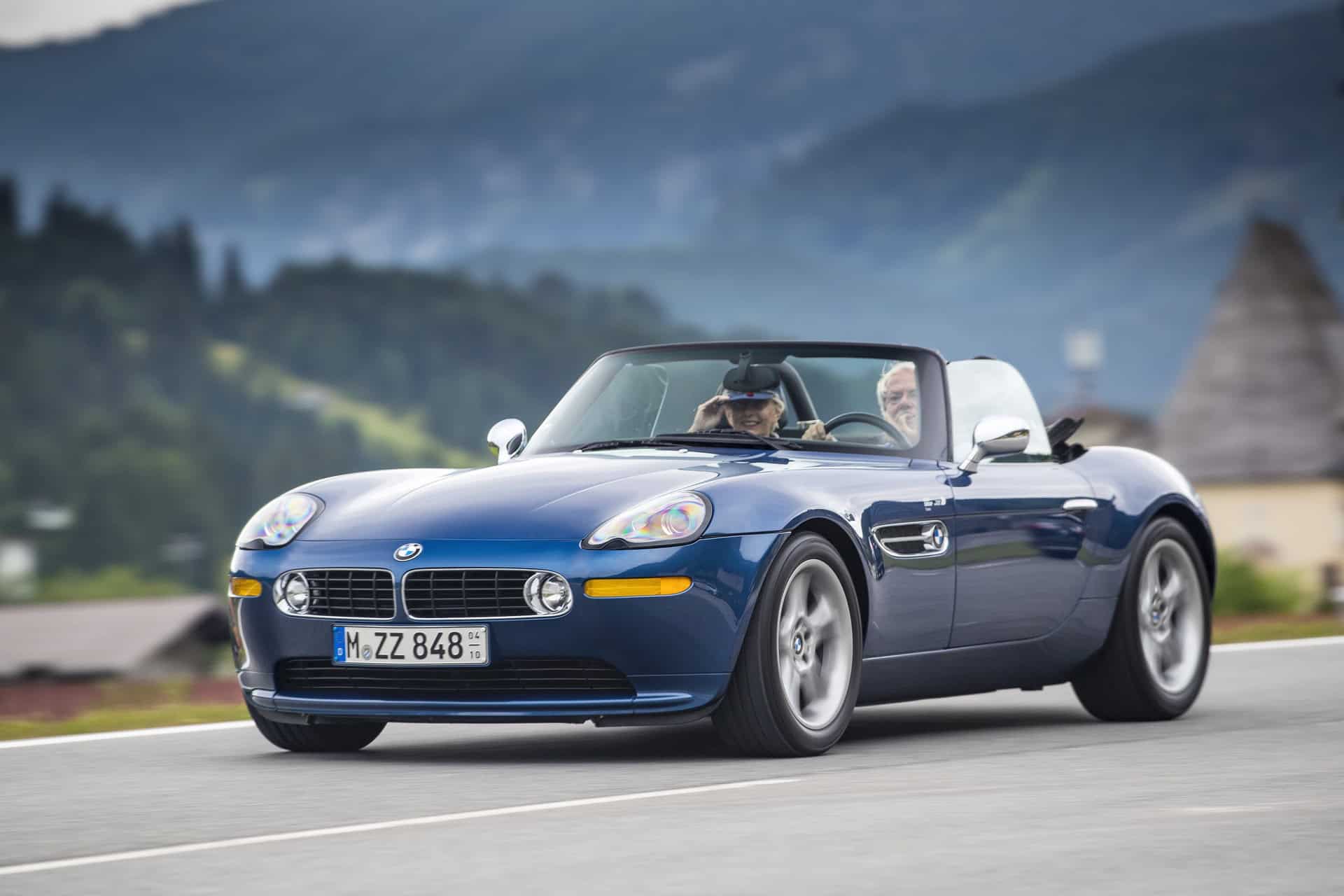
8. BMW Z8 in individual blue color “Topaz Blue Metallic”
BMW Z8 values are already strong thanks to limited production and a clearly defined character. But the Individual-program blue was chosen rarely, so supply is small compared with the more common silver or black cars.
Because of that rarity, Z8s in Individual blue often command 25–40% more than standard-color examples, assuming similar condition. In this case, color scarcity translates directly into higher market value.
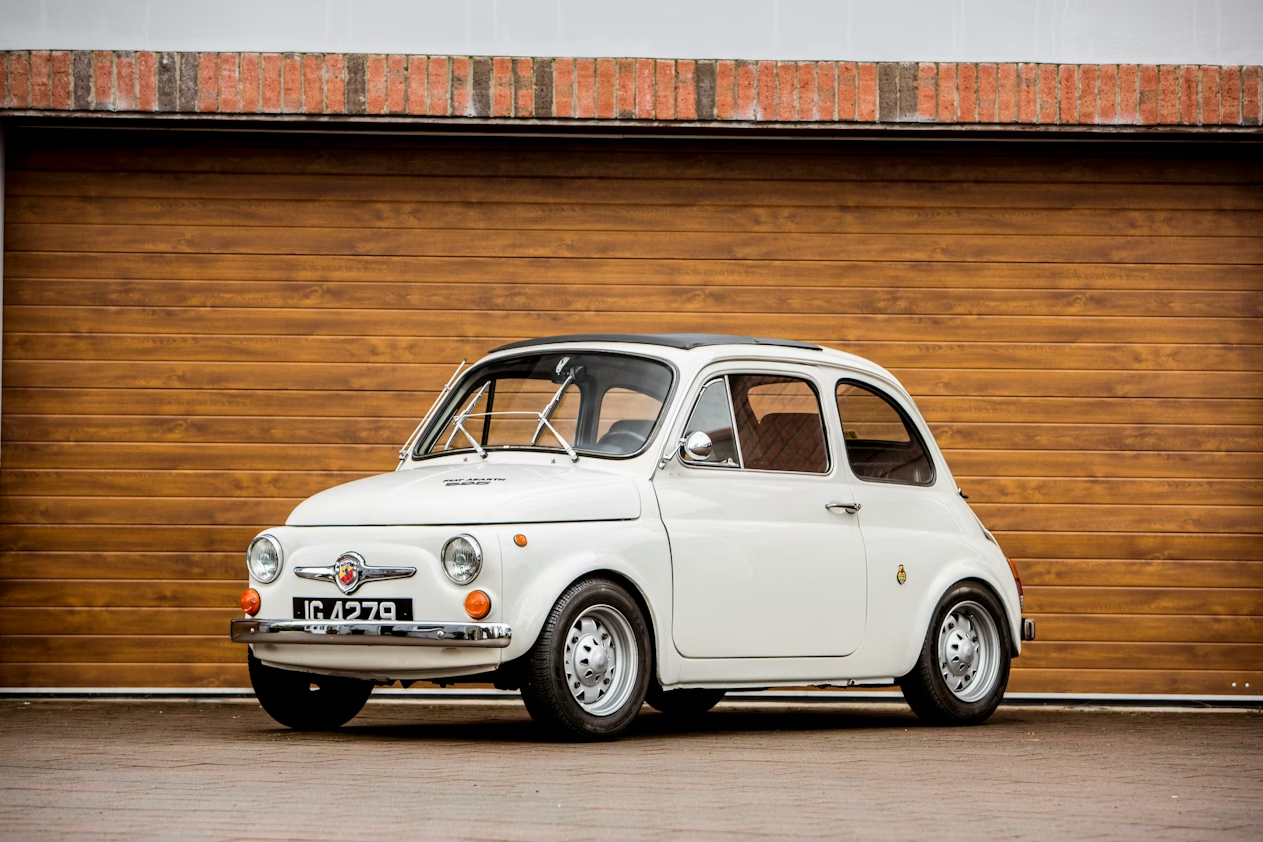
9. Fiat 500 Abarth EsseEsse komplektacija
The Fiat 500 Abarth has its own collector niche, and original EsseEsse packages are especially prized. Many kits were installed later at dealerships, so only cars with proper factory documentation are considered true EsseEsse examples.
The EsseEsse specification typically included higher boost pressure, improved cooling, upgraded brakes, and selected exterior details. Since only a portion of cars received the package as a documented factory spec, supply is limited. Prices are often 30–40% higher than for a standard 500 Abarth.
The difference is authenticity: factory-documented cars are valued far above later, retrofitted modifications.