ALPINA evolution from 1965 to today
Alpina cars are built on BMW foundations, forming a distinct branch of the brand’s model family. The changes target what defines the drive: engine calibration, gearbox matching, suspension tuning. Where needed, aerodynamics are refined so the car remains stable at sustained higher speeds.
Over decades, Alpina’s direction has stayed consistent: speed designed for long journeys, and stability that does not demand comfort as a sacrifice. Alpina never set out to detach itself from BMW, but production volumes remained limited, which helped preserve a coherent engineering philosophy.
That long-standing relationship became formal from 2026, when Alpina was integrated into the BMW Group.
The beginning: first technical solutions (1965)
Burkard Bovensiepen’s workshop in Bavaria was officially founded on January 1, 1965. The first projects focused on changes to the fuel delivery system of the BMW Neue Klasse 1500.
Alpina started with specific technical solutions: components were replaced where they had a direct impact on how the engine ran, not on how the car looked. BMW recognized these kits and allowed them to be installed without losing the factory warranty. This was the start of a collaboration that later became a long-term partnership.
From the outset, Alpina kept a restrained visual language. The crankshaft and intake elements in the emblem made the focus clear: the engine was the center of attention. The symbol matched what was being changed.
The racing period: the 1960s–70s and the 3.0 CSL
In the 1960s and 1970s, Alpina entered international circuit racing. BMW cars became a test platform, and solutions were validated under real load. In touring competition, details decided outcomes: cooling efficiency, brake endurance, engine behavior over long distances.
On track, the car had to be tuned as a system. Change one assembly and you had to recalibrate the next.
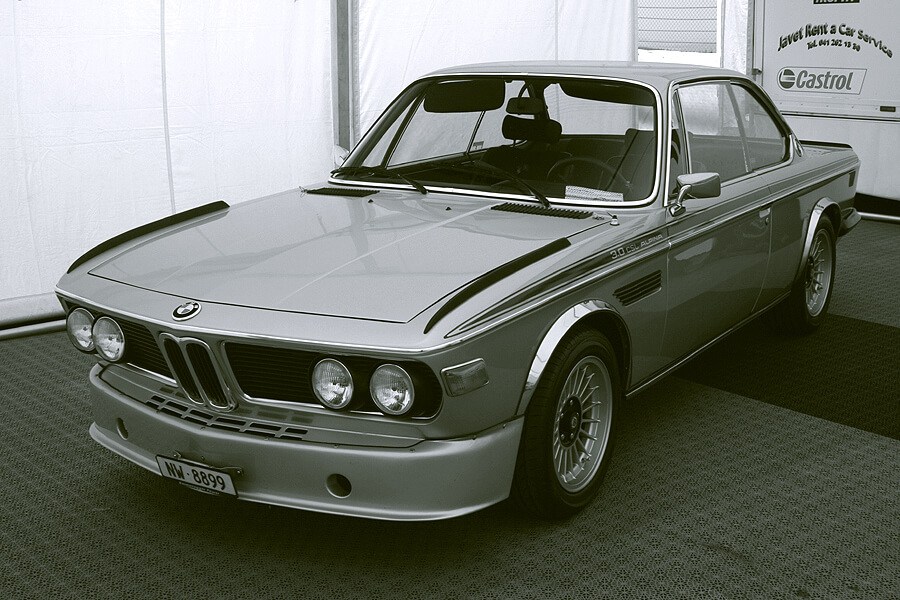
The clearest example of the era is the BMW 3.0 CSL. The model existed to satisfy racing regulations. Alpina’s track preparation was not about styling, but about targeted engineering decisions.
From modifications to complete models (1978–1983)
From the beginning, Alpina primarily offered individual upgrades for engines, transmissions, and chassis that were fitted to BMW models. This was work on separate assemblies rather than on the entire vehicle. The BMW base remained largely unchanged, while Alpina’s involvement stayed focused on specific mechanical solutions.
In 1978, that changed. Alpina began developing complete models on BMW foundations. In 1983, Alpina officially became a manufacturer in Germany. From then on, cars were badged and sold as Alpina, not BMW.
B7 Turbo (1978): defining the direction
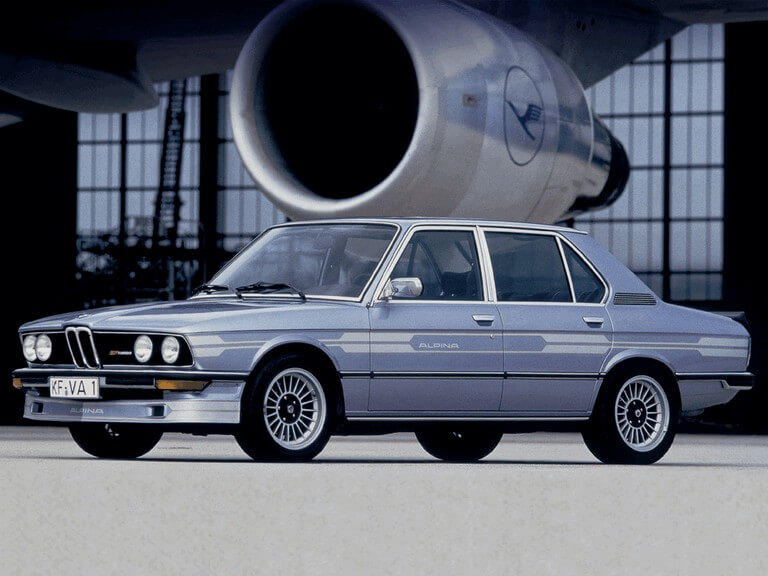
The B7 Turbo (based on the E12) became the model that defined the brand’s direction. In 1978 it introduced a turbocharger in a sedan at a time when high speed was more commonly associated with sports coupes.
The B7 demonstrated that the goal was not a radically sharper BMW, but a fast, stable car for longer distances. This is where the formula took shape and carried into later models: strong, usable torque, a balanced chassis, and comfort without unnecessary stiffness.
B10 Bi-Turbo (1989 m.)
The E34-based B10 Bi-Turbo became one of Alpina’s key models of the late 1980s. The foundation remained the series-production E34, but the engine and chassis revisions fundamentally reshaped the car’s dynamics.
High output and top speed were only part of the result. Just as important was how the car held that speed: stable, predictable, without abrupt reactions.
The B10 Bi-Turbo strengthened Alpina’s position in the US and Japan. In these markets it was valued not only for acceleration, but for stability at sustained high speed.
V12 models: the B12 line
In the 1990s, Alpina moved into V12 territory using the BMW 7 Series as its base. The B12 models (E32, later E38) revealed another side of the brand: large displacement, high torque, and smooth power delivery.
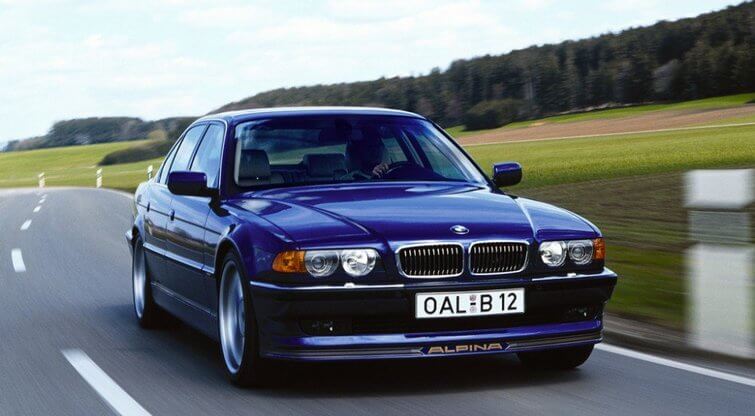
In these cars the priority was not peak numbers, but calm, effortless high-speed travel. Engine behavior, transmission calibration, and suspension settings were tuned for stability and quietness.
In the collector market, value is often shaped by original equipment, a clear specification, and documented history. This principle applies across many limited-production cars.
Modern models: B3, D3, B5, B7 and XB7
From the 2000s onward the direction did not change; it was adapted to new BMW platforms.
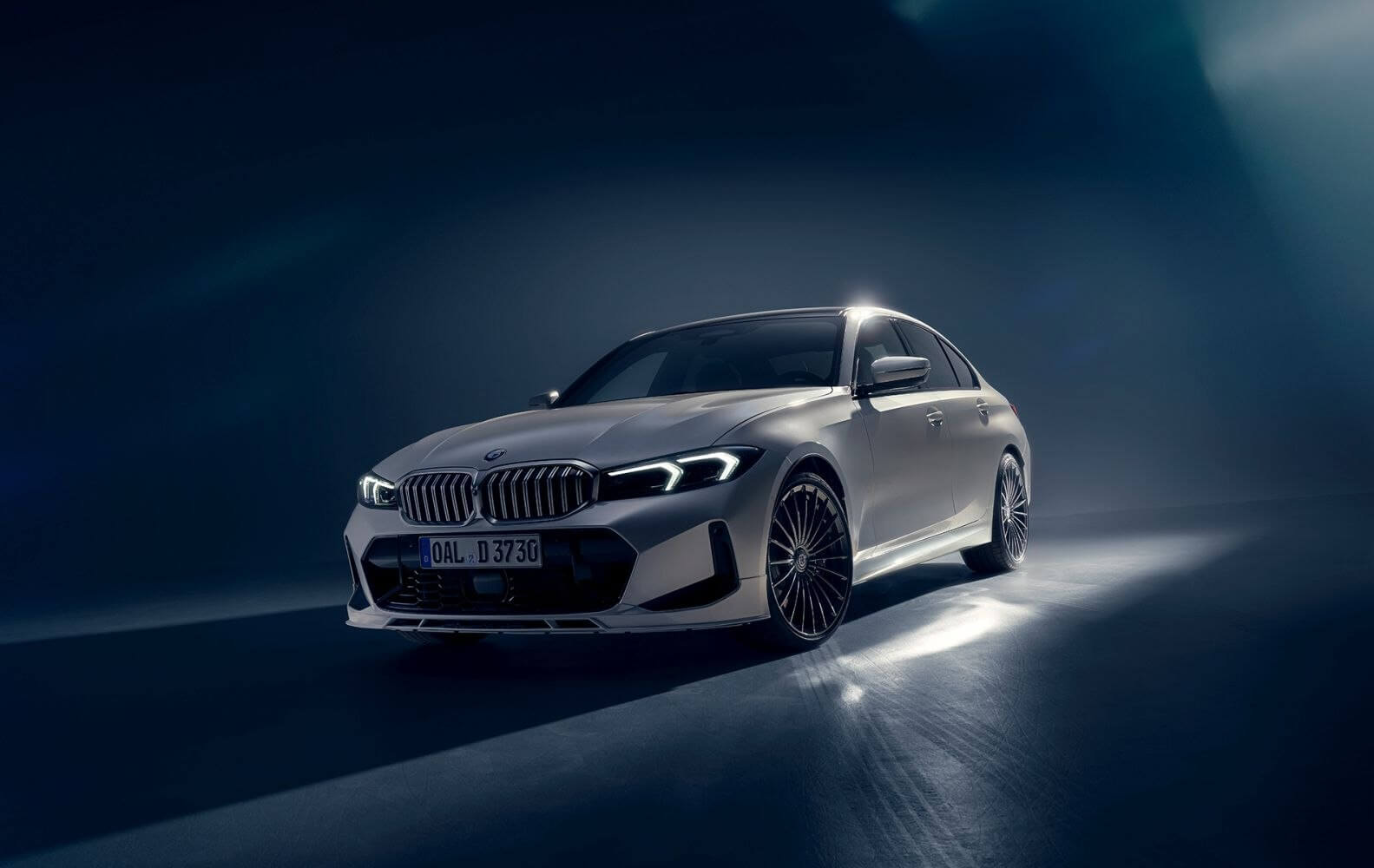
The B3 became a tighter, more compact interpretation of the 3 Series. The D3 proved that a diesel engine can be tuned not only for consumption, but for driving dynamics.
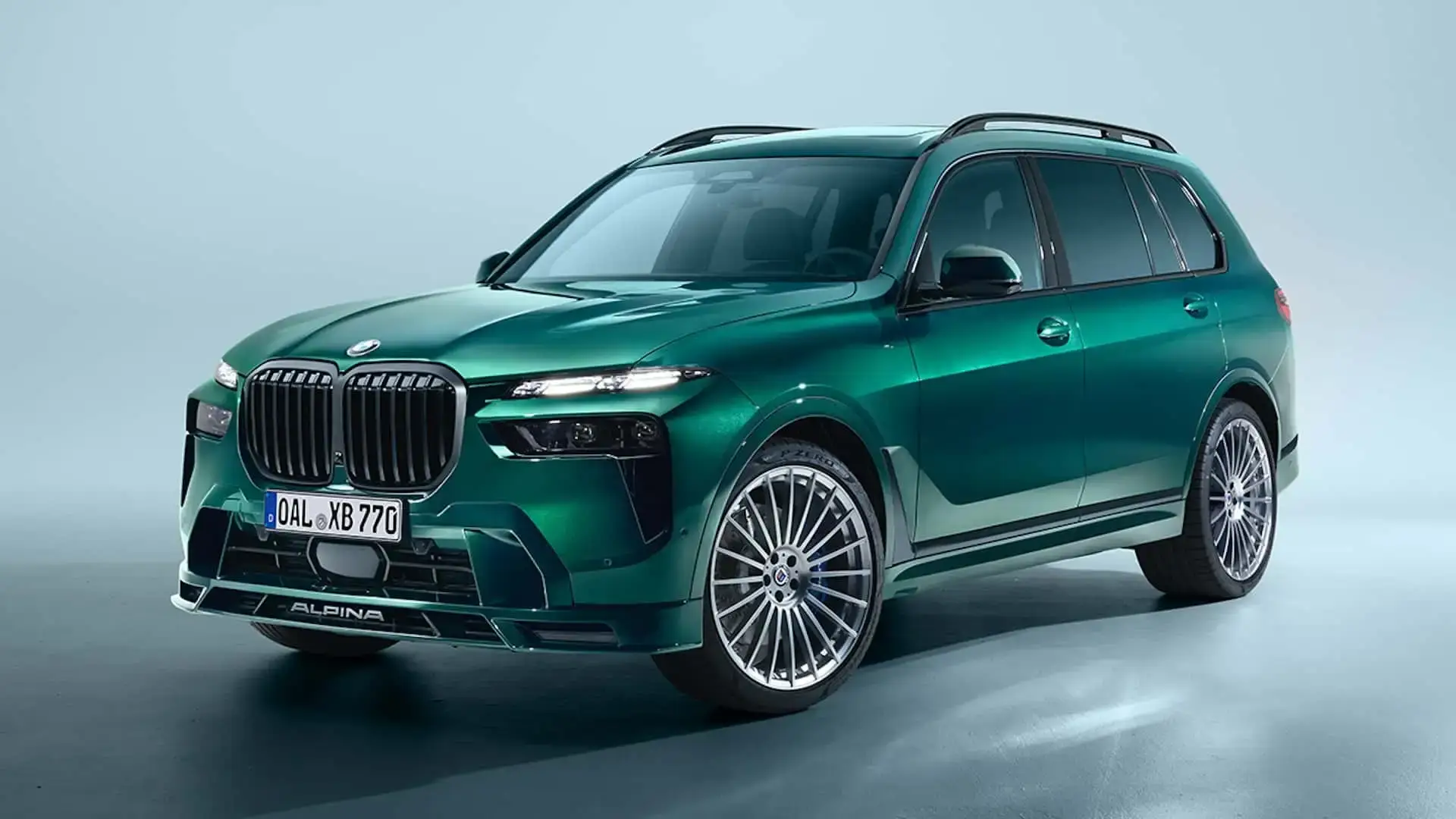
The B5 and B7 in the 5 and 7 Series continued the grand touring focus: high speed paired with stability and comfort. The XB7 showed the same logic can work in a heavier SUV format.
Visually, the models are recognized by distinctive wheels, restrained colors, and an aerodynamic package that is present but not overworked. These are identity cues that do not overshadow the underlying form.
Integration into BMW Group (2022–2026)
In 2022, BMW Group acquired the rights to the Alpina name. From January 1, 2026, the brand is developed as a separate part of the BMW Group portfolio.
This is a structural shift, but the direction remains the same: performance and comfort without extremes.
Buchloe continues to operate the “Classic” and after-sales support division. Older models can be maintained and restored to original specification, which directly affects authenticity and long-term value.
Collector perspective
Alpina is not just a badge on the body. Every model had a clear technical purpose: improve what shapes the driving experience. The decisions were tied to the engine, transmission, suspension, and cooling, not image.
From early engine modifications to today’s B and X models, the same pattern remains: high speed aligned with stability and long-distance comfort. That consistency across decades is the core reason Alpina carries lasting value.