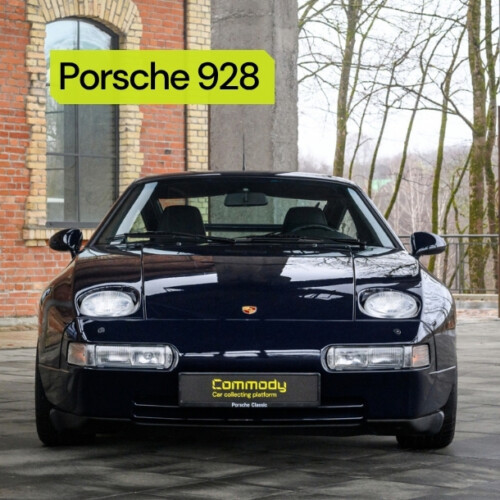
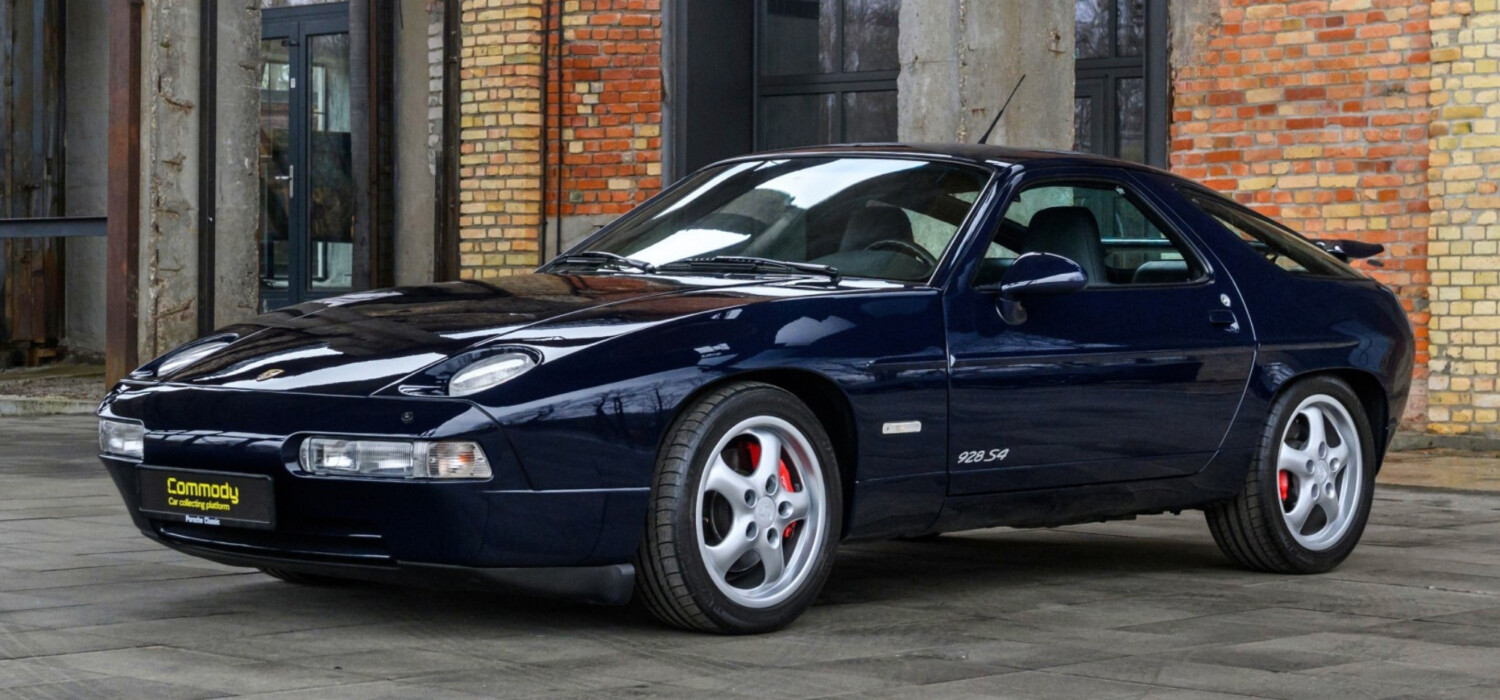
Porsche 928 S4 – The Boldest Turn in the Marque’s History
Author: Augustas Balčius, writer and car enthusiast
When Porsche introduced the new 928 in 1977, the company chose not to continue its legacy but to rewrite it. The refined and unexpected grand tourer was an exceptionally ambitious undertaking. It was meant to replace the 911, the flagship that had defined the brand’s success. Porsche claimed the 928 would become a broader and far more popular car than the compact, aging and increasingly slow-selling 911.
The 928 was a true tour de force and fundamentally different from the 911. A front-mounted V8, a rear-mounted gearbox, a 2+2 grand touring philosophy and the intention to position a completely different kind of Porsche as the core model all suggested that Stuttgart was searching for a new identity. Before long, these ambitions faded. The 911’s lifespan was effectively extended indefinitely. However, the 928 remained and brought many new ideas to the market.
Architecture and design
The 928 differs significantly from the rear-engined 911. Where the classic Porsche was always about concentrated motion, mechanical delicacy and a dramatic rearward weight bias, the 928 followed a completely different discipline. Here, balance, technical maturity and the ability to function as a true grand tourer take priority.
The transaxle layout, with the gearbox and fuel tank mounted at the rear and the engine positioned at the front, allowed for a perfect 50:50 weight distribution. The car also features the renowned Weissach rear axle, a passive rear steering system that ensures stability under heavy braking and through high-speed cornering. This configuration created a rational, stable and highly engineered machine, a formula still used in 21st century performance cars. The 928 became a new kind of Porsche.
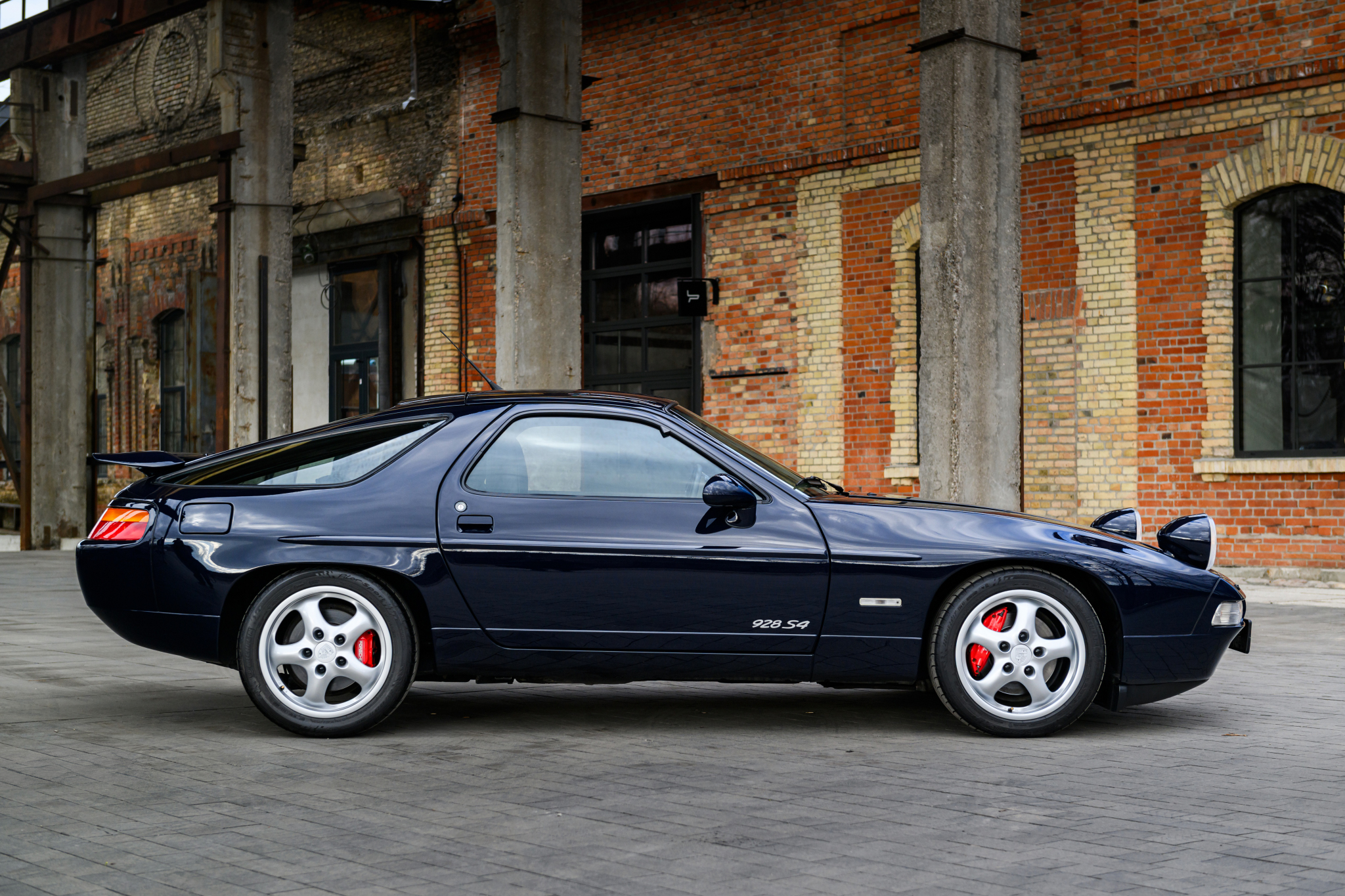
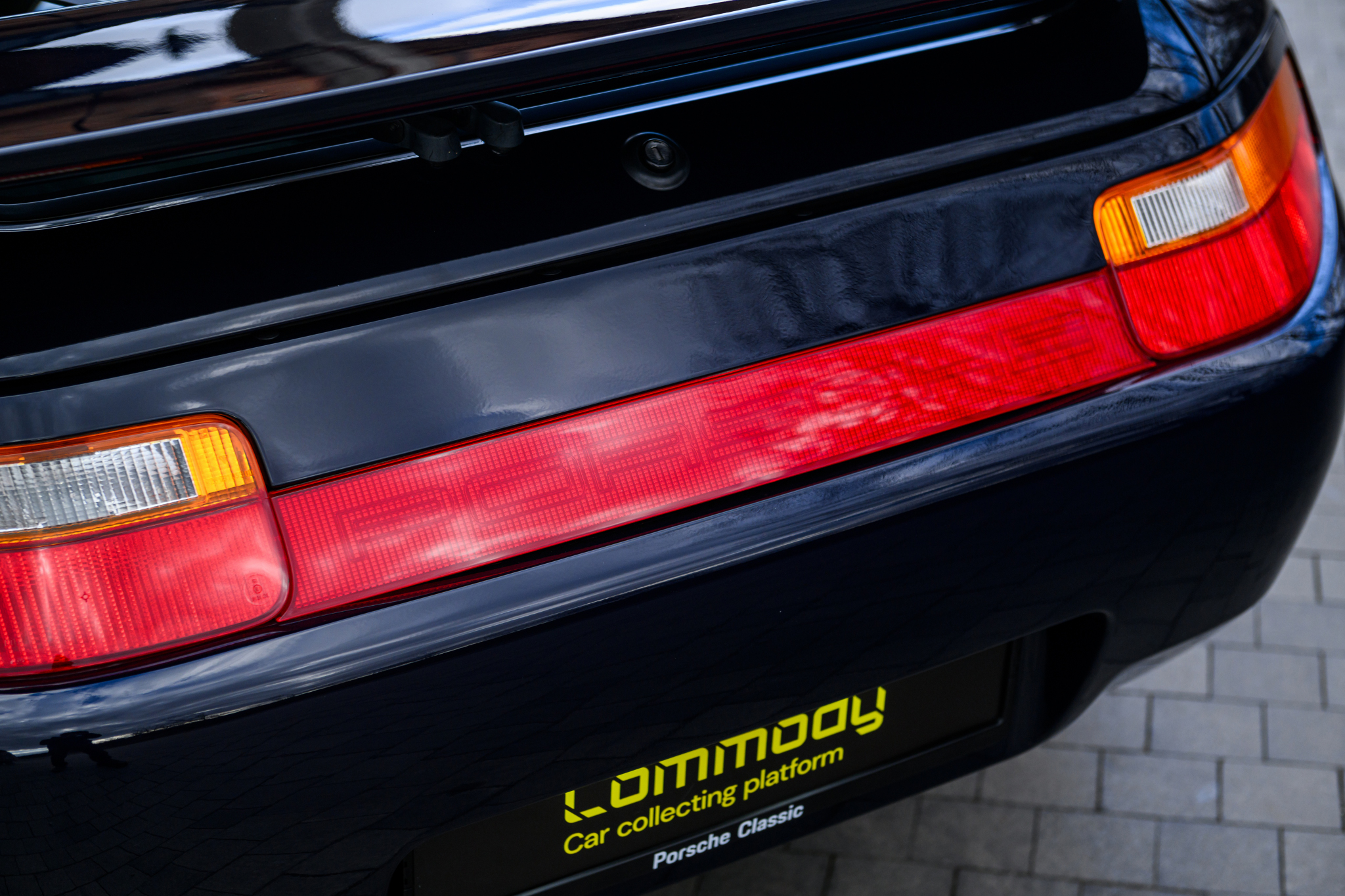
Its low and wide body with pop-up headlights and a smooth front end earned it the nickname “landshark”. It truly resembles a shark gliding across a surface, moving as if along the seabed. In profile, the unusually forward-leaning B-pillar dominates the silhouette. Together with the large glass rear section that hides a spacious luggage area for travel bags, it gives the car a sense of speed even when standing still. The upper part of the doors extends into the roof, a solution widely adopted by German and American manufacturers in the 1980s once its aerodynamic benefits became clear.
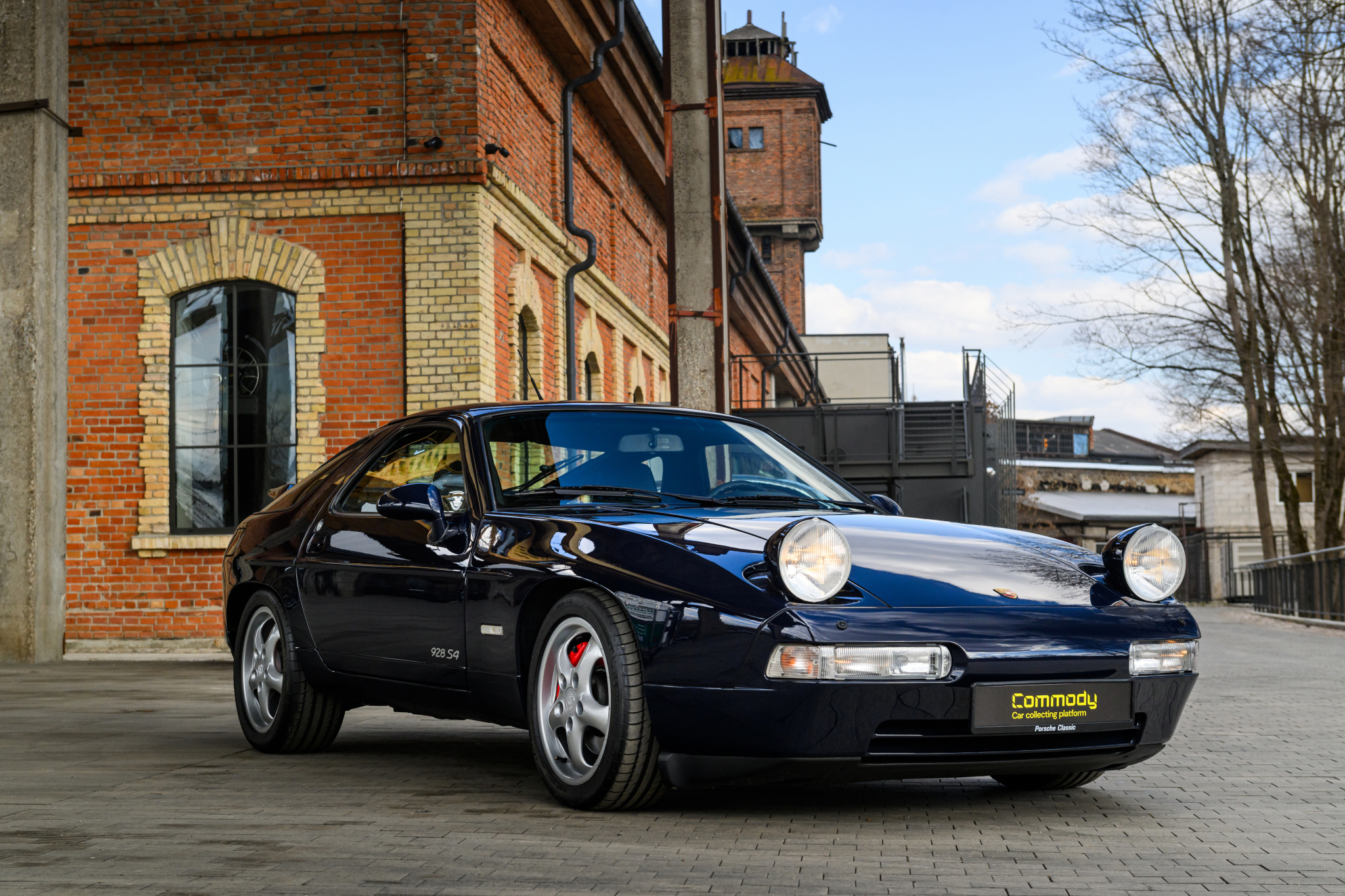
The interior gained a more ergonomic layout and a modern design theme. A distinctive driver-focused detail is the instrument cluster that adjusts together with the steering wheel. The traditional round Porsche headlights also serve a dual purpose. When switched off and retracted, they preserve a clean front silhouette that still hints at classic Porsche design.
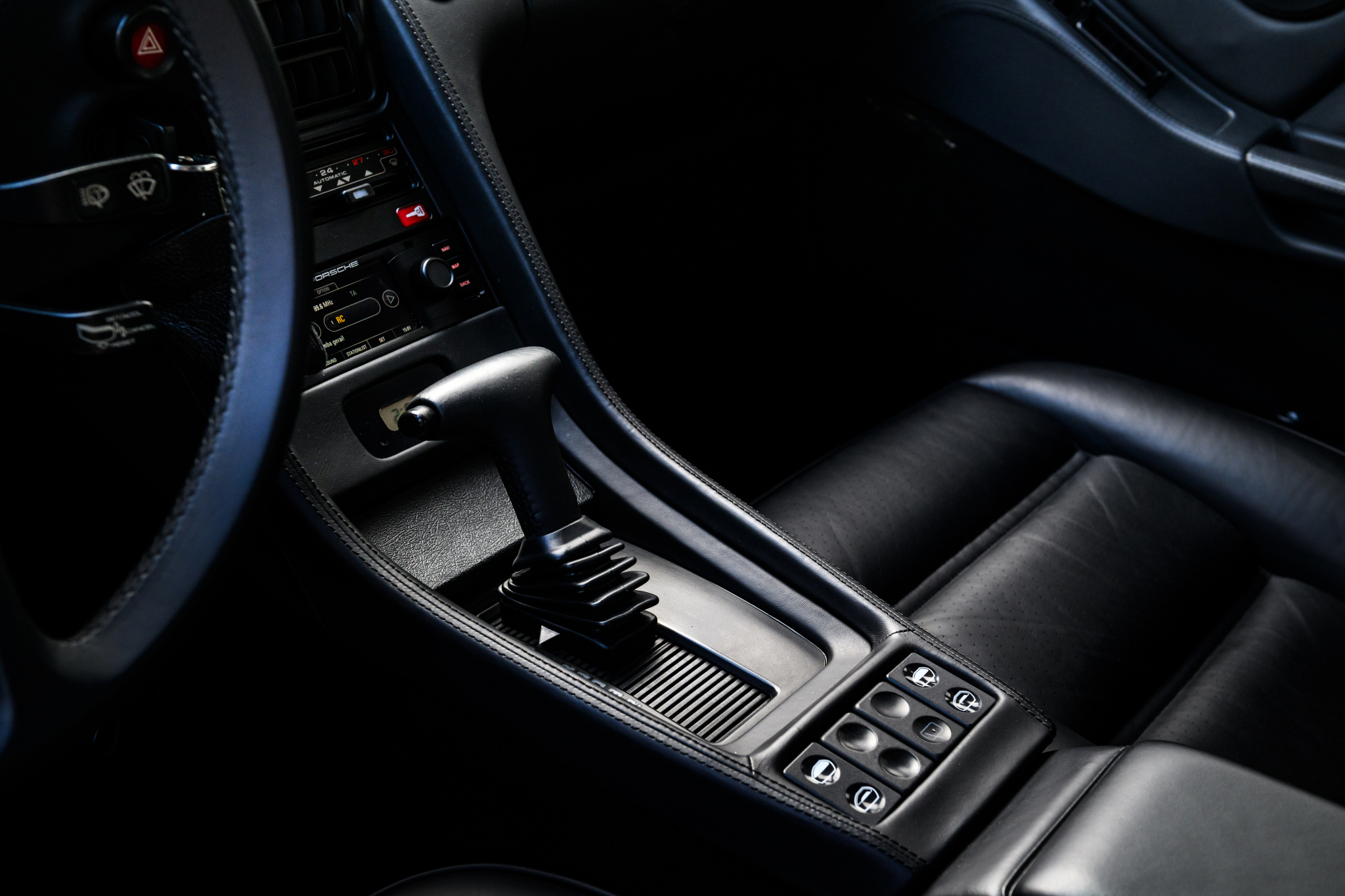
The design was driven by engineering and aerodynamic goals rather than public appeal. Many enthusiasts have long viewed the 928 critically due to its departure from Porsche conventions and the 911 formula. There is no excess ornamentation. Instead, there is a clear concentration of mass and a form that precisely defines the car’s purpose, to travel at high speed in exceptional comfort. While the 928 may once have seemed ironic in its attempt to reinterpret Porsche identity, today it appears vibrant, unique and unmistakably Porsche. It cannot be confused with anything else.
Evolution
The life of the 928 is defined by several key versions. In 1980, an updated model was introduced in Europe, receiving new front and rear spoilers, wider wheels and a revised 4.7 litre V8. During this period, several distinctive editions appeared.
In North America, the “Competition Group” package offered European-style spoilers, 16-inch flat disc wheels, a sportier suspension and Bilstein dampers. In 1982, the limited “Weissach Edition” was introduced, with 202 units produced. It featured champagne paint, a two-tone leather interior, an identification plaque and a three-piece Porsche luggage set.
That same year, the “50th Jubilee”, also known as the Ferry Porsche Edition, was introduced outside the US. It came in Meteor paint with a burgundy leather interior and striped seat inserts. With just 141 units produced, this version remains highly desirable and its value is unlikely to decline soon.
In 1985, the North American market received a new 5.0 litre 32-valve V8 producing around 288 HP, replacing the earlier 4.7 litre single cam engine. Interior updates followed and these models are sometimes informally referred to as S3. In 1986, the final S models received further technical improvements including stiffer suspension, larger brakes with four-piston calipers and a revised exhaust system derived from the upcoming S4. These late 928 S models formed a bridge between the early cars and the more refined S4 and GTS.
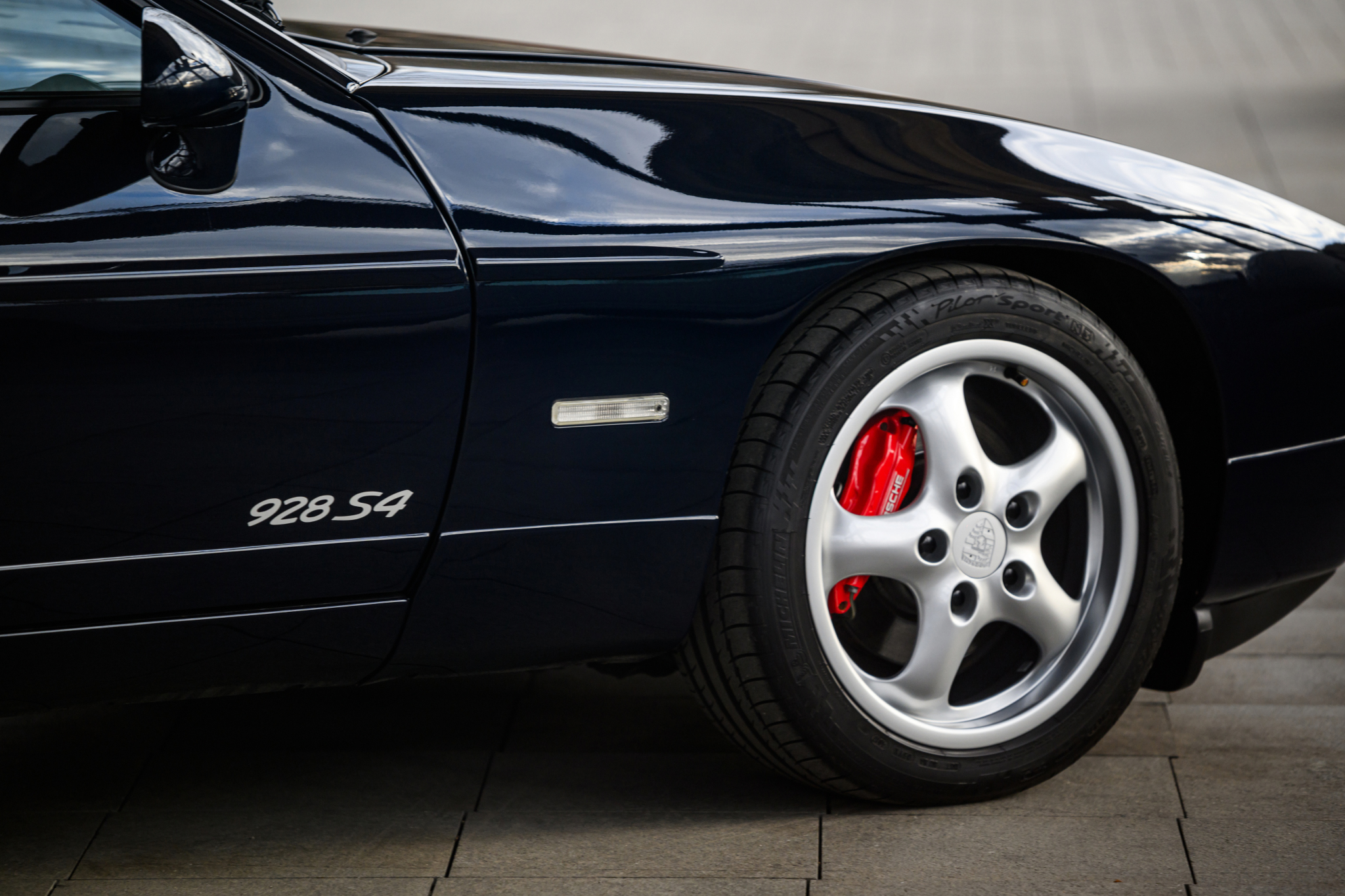
The final stage of the 928’s evolution was marked by the GTS, introduced at the end of 1991. It replaced the S4 and GT and brought wider rear arches, a wider track, a redesigned rear end and larger front brakes. The most significant change was a new 5.4 litre V8 producing 350 HP. In its final years, only 77 GTS cars were delivered to the US and total production remained relatively low. These became the ultimate and rarest interpretation of the 928, closing the chapter on one of Porsche’s longest-evolving models.
The Mature 928 S4
This particular 1989 928 S4 is one of the later and most developed examples. Introduced in 1987, it features the already mentioned larger 32-valve engine producing over 300 HP along with significantly improved aerodynamics that modernized the appearance.
This S4, offered by Commody, is finished in Dunkelblau with a black leather interior. The car began its life in Japan, arrived in Lithuania in 2018 and underwent one of its most important stages in 2020. In cooperation with an official Porsche representative, the body was restored and a completely new factory-specification engine supplied directly by Porsche was installed.
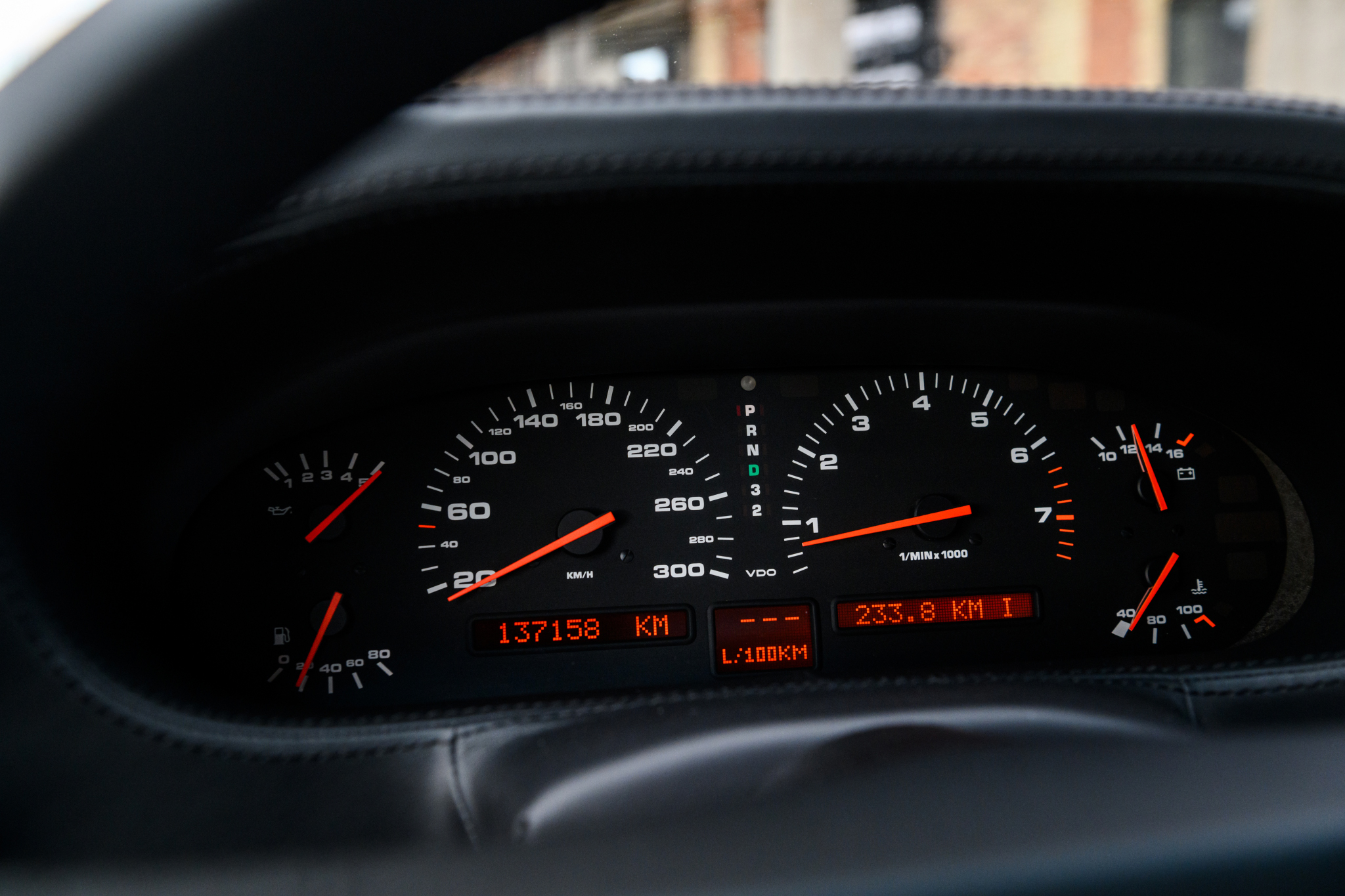
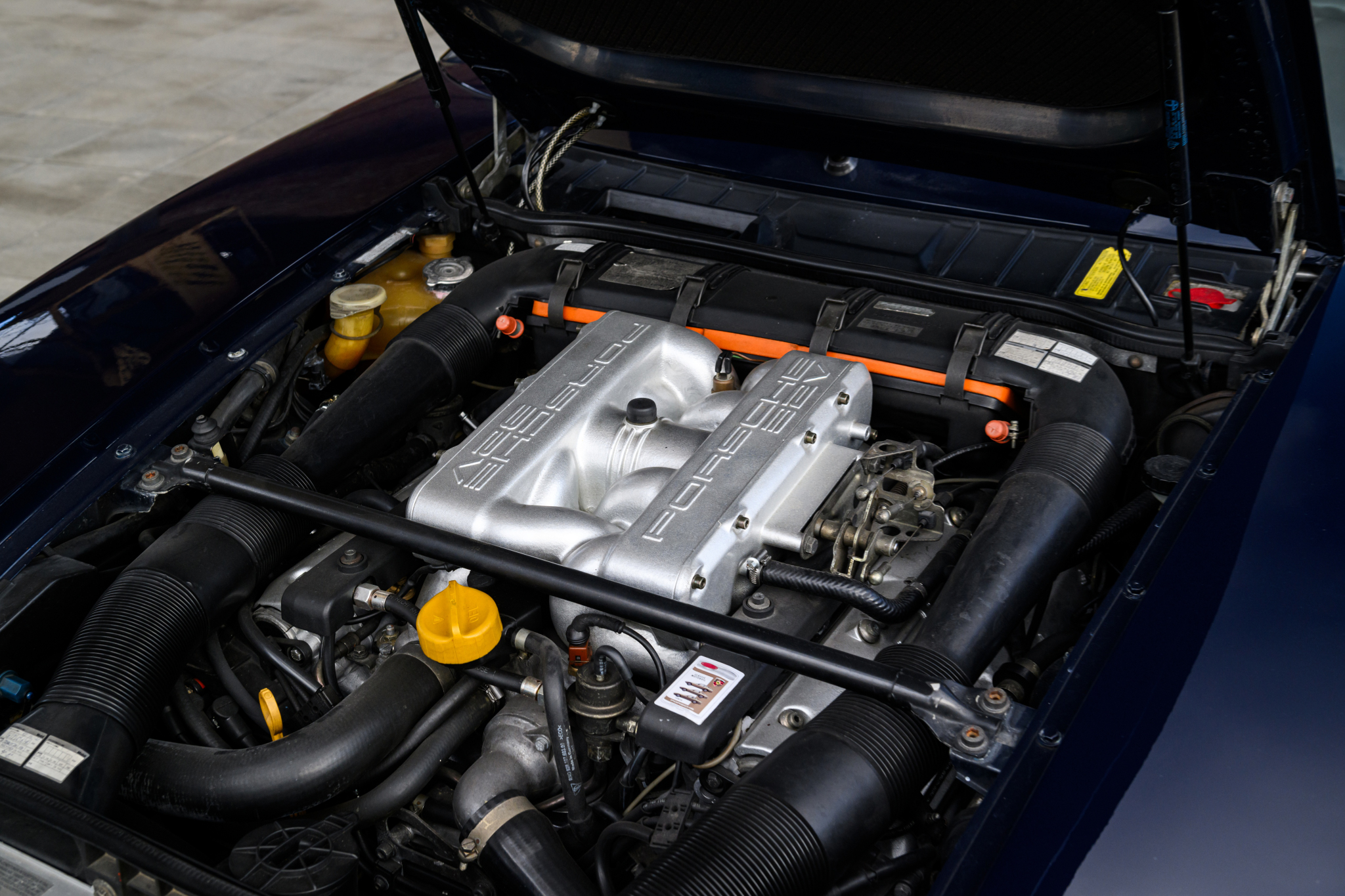
The 5.0 litre naturally aspirated V8 with an aluminum block produces 315 horsepower delivered through an automatic transmission. The car reaches 100 km/h in 6 seconds and has a top speed of 270 km/h. In S4 form, Porsche’s first V8 had evolved into a more refined, more powerful and more reliable unit, delivering smooth operation, strong performance and a sense of durability. This is a defining part of the grand touring character.
Market position
There is no shortage of 928 models worldwide, but not all can offer such a transparent and well-documented history along with confidence in future ownership. Since 2020, this example has been used sparingly, stored in a specialized collection facility and maintained by Porsche specialists at Apparatus Machinery. This matters just as much as the model name.
The collectible value of this 928 S4 lies not so much in its current price as in its future trajectory. The collector car market is no longer driven solely by the most famous models or the most successful marques. Increasingly, attention is shifting toward cars that were long undervalued, overlooked due to unconventional design or engineering limitations, yet possess a clear identity and an important place not only in a brand’s history but also in the evolution of automotive typology.
The 928 S4 meets all of these conditions. As a later production example, it is more refined, more complete and easier to maintain. It also represents a pivotal and difficult period for Porsche, where its unconventional nature became its strength. The 928 endured the economic and automotive market challenges of its time and became a study in technical progress and an example for others.
For many years, the 928 lived in the shadow of the 911. Over time, the collector market has begun to value not only loyalty to iconic models but also those that represent new directions within a brand’s history. In a world where Porsche stands for tradition, consistency and evolution over revolution, the 928 remains the most ambitious and determined experiment, one that has become a fully fledged collector car.
Take a look at Commody’s 928 S4 Coupe, 1989
This article is by Commody, a car collecting platform where anyone can become a real, legally registered co-owner of exceptional collectible cars from €25. See collectible cars and start collecting →